Showing posts with label when nobody returns. Show all posts

Monday, September 01, 2025

WRITE THEATRE - Guest blog by Brian Woolland

In Border Crossings' 30th anniversary year, playwright Brian Woolland looks back over his long association with the company, and forward to this autumn's WRITE THEATRE course, in association with Border Crossings Laboratory.

FOOL FOR LOVE (1995). Maria Gough & Miles Harvey

My first contact with Border Crossings was 30 years ago, when I saw Michael Walling’s production of Sam Shepard’s Fool For Love. As with many of Shepard’s plays, it’s extraordinarily evocative, the characterisation is complex, the language very rich. Michael’s direction brought out all these qualities, but he didn’t impose himself on the play. The audience was given space to respond to the compellingly enigmatic qualities of the play. 

Soon after that, Michael Walling and I established an excellent working relationship that continues to thrive because we share a vision of theatre as a social and collaborative art form that honours all the participants in the process – including the audience.

This blog is specifically about the forthcoming playwriting course, WRITE THEATRE, that  I’ll be jointly leading later this autumn, but it is also about the diverse nature of the collaborative process in theatre; and how running WRITE THEATRE has been as helpful to me in my own writing as I hope it has been for those who have taken part.

Collaboration and Border Crossings

None of the plays I’ve written for Border Crossings have been devised, but they have all involved various kinds of collaboration. Sometimes that takes the form of a simple dialogue about an early draft of the script; sometimes (usually at a later stage in the process) working alongside Michael and actors, trying out ideas, responding to suggestions. This can be a kind of ‘trying out,’ an opportunity to see how other people respond to material, a way of looking at what I’ve written through other people’s eyes. It’s crucial in such a process to avoid ‘defending’ the writing. There’s a temptation to tell the actors ‘This is what I intended.’ It’s much more useful to see and hear what others make of those early drafts. That word ‘make’ is central here because it gets at something that’s often forgotten when material is presented to an audience at any stage in its development: that the audience is active in making meaning, whether in a theatre auditorium, actors or students in workshop studio or a colleague in discussion over a coffee.

WHEN NOBODY RETURNS (2016). Tariq Jordan & Bayan Schbib

In the case of When Nobody Returns (which draws on The Odyssey and is focused as much on Telemachus, Odysseus’s son, as on his father) I led a series of workshops with young people from military families before attempting to write anything of the play itself. My blog for Border Crossings, Playing with Greek Fire, discusses how important these workshops were in the development of that play. 

In advance of the workshops, I formulated a set of what I call key focusing questions; questions that would not only inform and drive the workshops, but would also go on to drive the explorations I undertook in writing the play itself. These can be summarised as follows:

  • What do we mean by ‘home’?
  • How can people return from war without bringing the war with them?
  • When is it right to forget? When is it right to resist the temptation to forget?
  • How does somebody on the edge of adulthood negotiate a sense of their own identity in relation to an absent parent?

The young people were remarkably open and their responses very revealing, giving me a strong sense of the emotional landscape of the play. 

The idea of Key Focusing Questions is something I’ve found very useful. Keeping that uppermost in my mind, rather than what I want to say, is a way of trying to ensure that I’m using the writing as a process of collaborative exploration and discovery. It also keeps me more open and alert to the contributions of others. I’m not denying my authorship, but, rather, giving it full rein. 

WRITE THEATRE and collaboration

WRITE THEATRE: actors read the scripts
Playwrights have to spend a great deal of time alone on the hard graft of developing a playscript. But writing for theatre is essentially different from writing novels, short stories or poetry in that collaborations are at the heart of theatre; and that is reflected in the way that WRITE THEATRE courses are organised – with collaborative workshops, open discussions, practical exercises and one-on-one tutorials. 

The courses run over two weekends a fortnight apart. The first weekend comprises a series of workshops. Writer-participants work as a group, individually and in pairs, undertaking active writing exercises exploring elements such as dialogue, characterisation, plotting and thinking visually. These are not lectures but active workshops. Rib Davis (my colleague and co-leader) and I always take part in each other’s sessions. In the spirit of collaboration which we aim to foster throughout, we work with you, the course participants. The small numbers ensure that your contributions are always valued. The workshops are designed to enable you to find your own voice. It’s your ideas we work with.

In the two week gap between the first and second weekend of the course, every participant writes a short scene.

In the second weekend: course directors and professional actors explore these scenes, encouraging and enabling further development. That is what makes the course unique. The actors we work with are all highly experienced professionals who are enthusiastic about helping new writers, and know how to develop new writing by workshopping early drafts.

It’s not surprising, given the spirit of collaboration that we encourage throughout, that Rib and I have often find the course unblocks our own writing.

Applying for a place on the course

There is a strict upper limit of 8 participants on any WRITE THEATRE playwriting course. We do not ask for qualifications as a pre-requisite for acceptance on the course, nor do we ask participants to have had previous experience of writing plays, but it is essential to have a strong interest in theatre.

WRITE THEATRE courses take place at The Cockpit, Gateforth Street, near Marylebone.

If you’d like to enrol on our next course on the weekends October 25th – 26th and November 8th – 9th, go to the Enrolment page of the WRITE THEATRE website.

If you wish to enrol for the whole course (i.e. BOTH weekends), the fee is £500. We are offering a 10% discount to anyone signed up in response to this blog or the Border Crossings newsletter. Quote BC25.

To encourage young writers we offer a 50% discount to a limited number of writers under the age of 30. 

Wednesday, July 20, 2022

The lasting benefits of collaboration

Guest blog by Brian Woolland

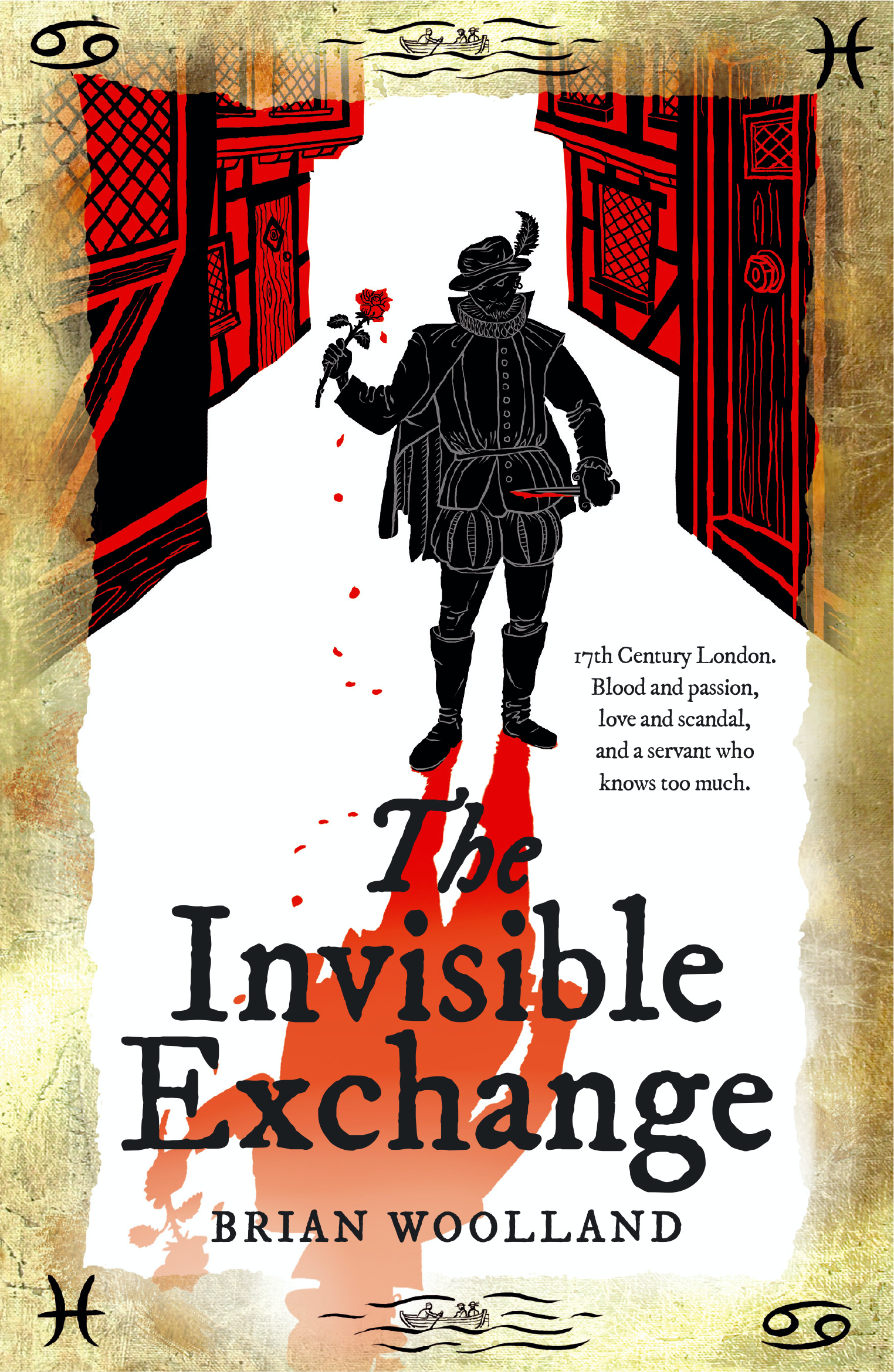
discussing his new novel The Invisible Exchange


Working with Border Crossings

I first met Michael Walling in 1996 at a conference at Reading University, Ben Jonson and Theatre, where Michael had been invited to lead a workshop on Jonson’s Poetaster. Since then we have worked together in several different capacities. We’ve established a warm friendship and a working relationship that has been very productive. I readily acknowledge that my collaborations with Border Crossings have all been greatly influential on my writing, but this blog is specifically about the evolution of my new novel, The Invisible Exchange (published at the end of July 2022), and how working with Border Crossings has been so significant in its development.

I’ve written three plays for Border Crossings – Double Tongue (2001/2002), This Flesh is Mine (2014) , and When Nobody Returns (2016). I also took an active part in The Promised Land project. The development of each of the plays involved extensive research, workshops and discussions – with Michael, the casts and those with interests in the subject matter. The processes of preparing and writing a play might seem very different from writing a historical novel set in the early C17th, but there are surprising similarities.

The historical background to the novel
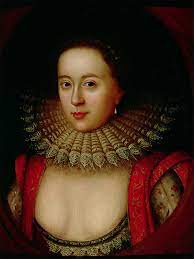
Frances Howard

I first became aware of the story of Frances Howard at about the time that Michael and I first met, when I was a lecturer in theatre at Reading University, and much of my work was focused on early C17th theatre. Contemporary events are often referred to in plays of the period. Aspects of Frances Howard’s extraordinary story are alluded to (albeit thinly disguised) in several plays of the period – perhaps most notably those by Ben Jonson, Thomas Middleton and John Webster. Frances Howard was the daughter of Lord Thomas Howard (Earl of Suffolk). In 1604, at the age of fourteen, she was married to Robert Devereux, 3rd Earl of Essex, who was about six months younger than her. The arranged marriage was intended as a political reconciliation between two immensely powerful families. But the marriage was a disaster. Despite his inability (or unwillingness) to consummate the marriage, Essex became intensely jealous of his wife’s popularity at court, and he insisted she leave London and live at Chartley Manor, his moated mansion house in Staffordshire, where Mary Queen of Scots had been held under house arrest immediately prior to her execution. Frances was there for much of the summer and early autumn of 1611. 

On 25th September 1613, her marriage was annulled, and thus she became the first Englishwoman to successfully seek her own divorce – but in a deeply misogynist society she paid a terrible price for her fierce intelligence and independent spirit. Two years after marrying her second husband (Viscount Rochester, formerly Robert Carr) she was accused of murdering Sir Thomas Overbury, who had been imprisoned in the Tower of London on a charge of treason. No evidence was produced at her trial which would stand up in a modern law court, and she was not permitted to defend herself despite having to suffer a stream of damning accusations which amounted to little more than malicious libels. The central argument against her was that she was a ‘creature of the deed’ – meaning that if she dared to initiate her own divorce proceedings, then she must be capable of murder.

The story fascinated me for numerous reasons. Frances’s trial revealed so much – not only about misogyny, but also about corruption at the heart of the Stuart court. I was intrigued by the parallels with our so-called ‘modern’ times. Frances was treated as a femme fatale who was branded by her prosecutor as so evil that she wasn’t allowed to speak in her own defence at her trial. The murder of Sir Thomas Overbury resulted in the execution of four ‘bit-part players’ and the imprisonment Frances and Rochester (by then they had become Earl and Countess of Somerset). Frances pleaded guilty to the charge of murder, though it seems likely that this was a kind of plea-bargaining because by then she and Rochester had a daughter, and the family was allowed to live together in relative comfort in the Tower. That in itself is very strange, for if they had been genuinely guilty of murder they would almost certainly have been executed. After seven years in the Tower, however, they were pardoned by King James, and released.

All of this intrigued me, although I had no idea how I would write a novel about it – until I came across rumours in contemporary pamphlets which referred to persistent rumours that Frances was seen in and around London during the period when Essex kept her under virtual house arrest at his mouldering manor house in Staffordshire. There is no evidence in the historical records that she was spirited out of Chartley, but for me it provoked ‘the big suppose’ that gave me starting point for the novel that became The Invisible Exchange. 

Points of view

When Michael and I first met, we naturally talked about shared interests. One of those interests was the theatre of Ben Jonson. Jonson was a complex man who wore his contradictions proudly. In some ways he was a conservative. In his poetry he often champions the stability of an old order, but in his plays he positions those from the underclasses and in the social margins at the very centre, he gives them real agency and invests them with wit and energy that far surpasses their social ‘superiors’. As Peter Barnes (who also participated in that conference) put it: 'Jonson never writes about Kings and Queens, that whole moth-eaten hierarchy of privilege and incompetence, but about people like us, working people who work to live...' (1). It was exactly those qualities that appealed so much to me and which also attracted me to the work of Border Crossings, for one of the defining characteristics of the company’s work is the desire to give voice to those who have been socially, politically, historically and geographically marginalised.

Although Frances Howard was an aristocrat (her family was said to be one of the wealthiest in the Kingdom) she has been marginalised by the Jacobean ‘justice’ system and by historians until very recently. I was interested in the way the story revealed the ways that institutionalised misogyny vilified and silenced her. (2) I started on a version in which the story was told predominantly from her point of view, but I found that didn’t enable me to reveal the mechanisms of that misogyny. I continued working on the novel in various different versions over many years, setting it aside for long periods while I worked on other projects, then returning to it. It was there in the background while I worked with Border Crossings on the two Homer plays and on The Promised Land project.

The workshops with Zoukak Theatre in Beirut (3) had a profound impact on me, and on the development of This Flesh is Mine. I took a series of early drafts of scenes which I imagined would form the spine of the finished play. As in The Iliad itself, these episodes were predominantly from the point of view of Achilles. In response to those workshops the play changed in many ways. As I wrote in an earlier blog:

Perhaps the most important single change in my thinking was to realise the importance of Briseis in the narrative. She is only mentioned twice in The Iliad – in the opening pages and the final pages. The … ‘spine’ of scenes referred to above… now becomes what is effectively Act One – which is set in an ancient world.  The characters – Achilles, Agamemnon, Briseis, Hecuba, amongst others – continue through to the second act; which is set in a modern world. In Act One, the modern bleeds into the classical; and in Act Two, the classical bleeds through into the modern. And what starts with Achilles as the central character … gradually shifts focus to Briseis and Hecuba. (4)
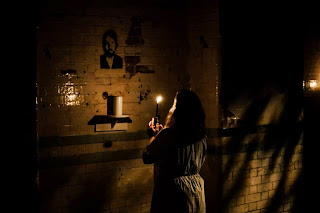
This Flesh is Mine

The conversations with Michael and with the workshop participants at Zoukak (and at a later stage with the Palestinian actors of Ashtar Theatre) resulted in major changes to the play that became This Flesh is Mine. On a more sub-conscious level, these conversations affected my thinking about the historical novel (which was gently simmering on a back burner at that time). When I returned to working on it, I knew that I needed to use a different narrative voice, to find a central character who would have the potential to engage a reader through an unusual perspective – in short, an equivalent to Briseis. He or she would be an outsider, who had access to the corridors of power, who knew the world of the Jacobean court but was not part of it. I wrote several chapters from the point of view of a gentleman usher. I wrote chapters through the eyes of Frances’s personal maid. But found that their social roles made them too passive. They could observe, but not affect what they saw. I needed a character who could exert more agency. 

And so, after several false starts, I experimented with telling the story through the eyes of a character who had been a relatively minor player in earlier drafts – Matthew Edgworth, a rogue and a fixer who’s employed by Rochester to enable his affair with Frances. Matthew is a fictional character, although the world he inhabits is thoroughly researched. In the novel he talks briefly about how much he learnt from going to the theatres from an early age. I didn’t consciously create him in the tradition of those Jacobean malcontents who breathe such wit and dark energy into some of the plays of the period – for example, Edmund in King Lear, Bosola in The Duchess of Malfi, Flamineo in The White Devil (both by John Webster), De Flores in Middleton and Rowley’s The Changeling – but that is what Matthew became, a cross between a malcontent servant determined to break the glass ceiling and a Jonsonian trickster. As Matthew puts it (for the novel is written in his voice), “I’ve never had my master’s looks but I’m no fuckwit. If a smockfaced page can rise to favour, I too can make my way in the world, even if my scarred face will never decorate the pillows of the powerful.” Matthew’s story began to develop a life of its own. The overweening ambition and ruthless cunning that he’s inherited from his dramatic ancestors drives the novel’s plot, but it also serves an additional function, giving him access to the palaces and grand houses of the aristocracy, as well as the murky underworld of Jacobean London – the taverns, the gambling dens, the brothels and the prisons. 

When Nobody Returns – seeing from inside and outside

Although I cannot identify a specific moment during the development process for When Nobody Returns which is an equivalent to those workshops with Zoukak, it’s clear to me with hindsight that the discussions with Michael and the cast, and with the workshop participants (5) led me to write a play in which each of the three central characters, Telémakhos, Penelope and Odysseus, is in some ways an ‘outsider’. Telémakhos and Penelope have been forced to become outsiders in their own homeland because of the occupation. At the start of the play (and of The Odyssey) Telémakhos is twenty years old, the same age his father was when he left home to fight in the Trojan War. He hears rumours about his father, and is determined to discover the truth about them, so he leaves for mainland Greece to seek out those who knew his father. His identity is bound up with knowing his father, living up to (or living down) the stories he hears about him. When he reaches the court of Menelaus he becomes a stranger in a strange land, and on returning to Ithaka and finally meeting his father, his sense of self, of what is right, of what is necessary to rid the island of the occupation, is profoundly challenged. 
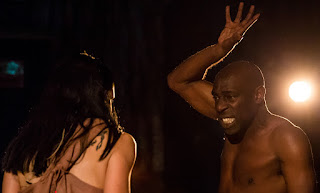
When Nobody Returns

The main character in When Nobody Returns may be Odysseus, but the point of view in the play shifts. We see the occupation of Ithaka through the eyes of Penelope; and, as in Homer, it is Telémakhos’s curiosity that takes him to the court of Menelaus, where he hears stories about his father. Penelope has become an outsider in her own home, and her attempts to subvert the occupation are important – for what they reveal about her strength, and also for what they reveal about the inhumanity of the occupation. Telémakhos is an outsider in search of the ‘inside’ information that will lead him to his father. And his father, Odysseus, is a stranger to himself, struggling to come to terms with his own identity as he battles those demons that still haunt him after his experiences of war. And throughout the play there is a continuing interrogation of what we mean by home – what draws us back, what keeps us away, and what happens when the solid certainties of home become unstable, whether through occupation or trauma.

Thematically, a number of similar concerns run through The Invisible Exchange. Matthew Edgworth is both an insider and an outsider. Like Odysseus, he’s a shape shifter, a master of disguise who can adapt to different social situations; and like Odysseus, he’s renowned for his cunning, but he is a dangerous man; a danger to others, and ultimately a danger to himself. But there are also echoes of Telémakhos in his characterisation. For all his roguish cunning, there’s a softer side to Matthew than the character he seeks to present us with. As Kate (Frances Howard’s maid) says to him: ‘You are not so heartless as you pretend.’ And the relentless curiosity he shares with Telémakhos makes him open to the different cultures he encounters. He’s successful as a trickster because he can use the desires of those he’s gulling against them. But to do that successfully, he has to be an attentive listener and to think as others think As he says about working for Rochester, ‘… the trick of it was to plant the seed, give it time to grow, then be astonished at his razor wit as the seed sprouted and the plan became his own.’ In the course of the novel, he meets four strong, powerful women, each from very different backgrounds: Frances Howard, the aristocrat; Alice, a woman he finds working as a prostitute; Kate, Frances’s personal maid; and Hannah, a cunning woman. He assumes he can manipulate and exploit them. But each of them challenges his certainties. Despite thinking he can work for Frances as well as Rochester, that he can play them off against each other to his own ends, he realises that Frances is ‘as ruthless as any of the men in her family, and far shrewder than her lover or her husband.’ I’ll leave the reader to discover how Matthew is confounded by his dealings with Kate and Hannah. It is, however, important to mention Alice, for her character evolved in response to our experiences of The Promised Land project. Matthew first meets her when he visits a brothel, ‘the House at the Sign of the Vixen in Petticoat Lane. I’d come to see Diego, the broker for the house. He owed me favours.’ Matthew sees a common prostitute. Alice, however, is not what she seems. As she herself says, ‘No matter where you found me, I’m no whore. And I cannot be bought.’ She refuses the easy labels that society assigns to her, and gradually we (and Matthew) discover her history. The large-scale settlement of Huguenot refugees in Spitalfields did not take place until the 1680s. But the persecution of Protestants in France and Holland had started long before that. This novel speculates that some families, such as Alice’s, had already tried to settle in the area in the early seventeenth century. By the time we were working on The Promised Land project, I had begun to make real progress with The Invisible Exchange. But Alice was still a walk-on role. I had always thought of her as intelligent and spirited, but hearing so many stories of real refugees, told with such passion and dignity, I felt compelled to allow Alice a far more significant role in the novel than I had originally conceived. It was the role her story demanded. I conceived of The Invisible Exchange as the first novel in a trilogy. I am currently working on the second, Creatures of the Deed. The character of Alice has now become so important and her story so urgent that the third novel in the trilogy (provisionally entitled The Turbulent Surge) has Alice as the central character and narrator. She will get to tell her story. 

Work that changes us

One of the things I have most enjoyed about working with Michael and with Border Crossings has been the sense that the work we’re doing may be for others, but it changes us. The process itself is always a discovery. Crossing borders – our own as well as those imposed by others (political / social / cultural) – is at the heart of the work. I have been challenged and my work has been enriched by the collaborations. In The Invisible Exchange, Matthew’s attitudes and assumptions are of his time and his place, but he sees possibilities, and he acts on them:

‘I liked the way Hannah thought. Stay alert to possibilities. When Lady Luck smiles, be sure to smile back and accept what she’s offering with good grace, for she’ll turn on you and damn you quick as blink. You see a possibility. You make it happen.’

The Invisible Exchange is now available in paperback from all bookshops, and in all e-book formats from 28th July.

1 Extract from the text of  Peter Barnes’s illustrated lecture on Jonsonian comedy at the Reading Conference on 10th January 1996.


2 David Lindley’s excellent book, The Trials of Frances Howard (Routledge 1993), offers a closely argued and rigorously research analysis of this institutionalised misogyny. 


3 The workshops in Beirut were funded by The British Council. The original intention had been for Border Crossings to co-produce with Zoukak. For logistical reasons that proved impossible. 


4 Michael has also written a blog about the process of working with Zoukak.


5 The key workshops that informed the development of the play took place in Salisbury with young people from military families, and with Palestinians at a summer school held in Jordan under the auspices of the Al Qattan organisation.


Tuesday, January 03, 2017

2016

When Nobody Returns - Andrew French as Odysseus with Bayan Shbib as Calypso
Well - that was quite a year.  And I don't mean because lots of celebrities died.  Actually, I suspect that from now on, lots of celebrities will die every year - popular culture in its current form dates from the 60s and 70s, so, as the Americans say, do the math.  But perhaps that does make this a suitable moment to question the huge amounts of emotional energy that are now devoted to such people - famous for looks, quirky soundbites and private lives led all too publicly.  As George Monbiot argued recently, the Trump election is the logical outcome of this.  And it's making 2017 look daunting to say the least.

2016 was also, of course, the year of the referendum.  It was NOT the year of Brexit - the actual leaving of the EU - which may still be some way off...  Here's hoping.  Even so, it's already proving impossible to attract European partners to work with UK-based organisations on intercultural projects, either in the arts or in education.  This is going to make the future challenging for us at Border Crossings, where international collaboration is central to our mission, and where the structures of the EU have been hugely beneficial.  For the time being, we are continuing to run our intercultural theatre courses, which have to date had a European emphasis - but in future we'll be looking to engage more participants from the UK and the wider world.  This summer's course actually started on June 24th - the very day the referendum result was announced.  It felt difficult, to say the least, to welcome our European guests to London.

One of the key strands of our work during the year has been to address the European question of the refugee crisis.  Lucy has been working very directly with a number of refugee groups throughout the year, particularly unaccompanied minors and women - while I've been speaking about the role of culture in addressing the crisis at events in Karlsrühe, Stockholm and Brussels, including a significant contribution to the EU's Voices of Culture report on the question.  People often accuse the EU of being undemocratic - but I've never encountered genuine consultation and dialogue like this at a national level.  So we also have to re-think how Border Crossings can continue to have an active political voice in the aftermath of Brexit - it's really crucial that we maintain this in some way, as the interplay between theatre and policy is surely key to what we are about.  Sabine Frank, the former Secretary-General of the Platform for Intercultural Europe, says as much in our 21st birthday publication, 21 FACES OF BORDER CROSSINGS.

While we were working with refugees and talking about the relationship between culture and refugees, we were also making theatre that explored the contemporary Middle East and the aftermath of war.  Brian Woolland's new play WHEN NOBODY RETURNS was a sequel to THIS FLESH IS MINE, and we presented them together as a season with our Palestinian co-producer ASHTAR and our old friends at CSSD.  The plays were accompanied by Palestinian food, a series of talks on related themes, a Middle Eastern poetry event, and a reading of a new play by Tariq Jordan.  The whole programme has a coherence, and, as the lady from the Arts Council said to me on the phone just before Christmas - "This is exactly the sort of work we need after the year we've just had".

2016 was also the year we made our first documentary film:  HIDDEN HISTORIES: DISCOVERING INDIGENOUS LONDON had several acclaimed screenings, particularly one at the Houses of Parliament.  We were, of course, thrilled when the narrator, Mark Rylance, was knighted in the New Year's Honours List!  And if all that wasn't enough - we also rebranded the organisation to mark its 21st birthday, with a lovely new design by Kind Studio and a beautiful new website from Future Design.  We also launched the 21 Club for our major donors - please do consider becoming a part of this: with the cuts to arts funding and the loss of European sources, we are going to be ever more reliant on our donors to support this crucial work.

At the end of the year, I usually write a bit about other cultural productions and events that have particularly excited me.  It's very striking that almost all the great theatre I've seen has been in some sense intercultural or from overseas: we SO need to keep our links with the world if we are going to be a dynamic and energised society...   2016 was the year of Peter Brook's Battlefield and Robert Lepage's renewed Needles and Opium, of Lola Arias' Minefield and Lies Pauwels' extraordinary The Hamilton Complex- all of them international productions in London.  It was also the year of the Young Vic's Yerma - adapted and directed by Australian Simon Stone - and the remarkable Thebes Land from our friends CASA at the Arcola - a play from Uruguay.  Even the finest homegrown work - Simon McBurney's The Encounter and Katie Mitchell's stunning version of Sarah Kane's Cleansed - were international in outlook and European in style and sensibility: these are two British directors who work across the continent.  And it shows.

I'm writing this on the day our Ambassador to the EU tendered his resignation.  There's a rocky ride ahead - but Happy New Year, everybody.

Tuesday, November 08, 2016

A letter from ASHTAR Theatre

Iman Aoun of ASHTAR Theatre in When Nobody Returns
The text below is an open letter from our friends and collaborators at ASHTAR Theatre in Palestine.  Iman Aoun (Artistic Director) and Bayan Shbib have been working with us for the last two months on PLAYS OF LOVE AND WAR: and the company as a whole has been engaged with this project since 2014, most importantly hosting the rehearsals and opening performances of THIS FLESH IS MINE at their Ramallah base.  This is an incredibly important theatre company - one of the most important in the world - and now they really need our support.  

Colleagues and Friends of ASHTAR Theatre
Friends and Supporters of Palestine throughout the World

Ever since its establishment as the first drama teaching institution in 1991, ASHTAR Theatre with both branches in the West Bank and Gaza, gave scores of artistic theatrical presentations that earned a number of local, regional and global prizes. It helped bring Palestine’s message to the whole world in a civilized, humane and refined artistic means. Starting in 2010 ASHTAR Theatre launched an artistic global program designed to bring the voice of Gaza’s children to world forums with a view to lift the siege laid to it entitled the “Gaza Monologues”. We were honored by the participation of a number of theatre companies around the world to this program that ASHTAR Theatre launched in the city of Ramallah and Gaza to tour the world, passing through the United Nations.

In addition, ASHTAR Theatre graduated hundreds of students who gained social and artistic stature. They established new theater companies in the country. ASHTAR Theatre was also active in the introduction of drama in governmental and private as well as UNRWA schools starting in 2002. At the onset of 2012 ASHTAR Theatre administers a long term national programme in collaboration with the Ministry of Culture and Higher Education and other bodies with a view to provide training to “drama teachers” in Palestinian elementary schools.

For the last four years, ASHTAR Theatre has been facing dire financial difficulties that bar it from carrying on with its artistic and national journey, unless it obtains material support to offset this financial predicament.

We, at ASHTAR Theatre, administrators, artists, students and graduates contact you, the friends of ASHTAR and of Palestine, beseeching your support to enable keeping our Theatre doors open for the service of our children, our youth and our audiences spread throughout the entire Palestinian Territories. Any financial support geared towards us helps that purpose. Our campaign, today, aims at securing US$ 150,000, the amount of an accumulated deficit represented by the rental of the Theatre premises for the last three years and the operational costs of the institution in both branches, in the West Bank and in Gaza.

Should this amount be secured, it will greatly assist ASHTAR to continue in its existence and proceed with its operations in embarking on new programmes and doubling its presence as an important drama forum in Palestine.

We sincerely appreciate any efforts and contributions made to save this institution from eclipsing and help it maintain alive its message for Palestine.

For those who wish to assist ASHTAR Theatre, please contact us at the following e-mail address to provide you with the means of contribution.

info@ashtar-theatre.org

Best regards to you.
ASHTAR Team and Students


Tuesday, November 01, 2016

The Theatre under the Motorway

When Nobody Returns - Iman Aoun and David Broughton-Davies

When we first presented This Flesh is Mine, back in 2014, we used all three spaces in ASHTAR Theatre's lovely Ramallah space, and a fabulous London venue called Testbed 1.   We always knew that Testbed would be a one-off: the bulldozers moved in back in January, and it's doubtless well on the way to becoming a set of desirable dwellings.  So we've been resourceful again - and found a space under the Westway, just along from the bar where Elliot Tupac painted his extraordinary mural during Origins 2015.

The bay under the motorway is large.  You can see the concrete slabs that are the foundation of the road above your head.  Our set, which uses two raked stages facing one another, looks as if the road has fallen in and smashed in the space.  Cladding is ripped and incomplete.  Everywhere there is a sense of wreckage and of provisionality.  The perfect space, in other words, for a pair of productions about war and occupation.  Palestine too is a space with far too much wreckage, and a space where everything is provisional and nothing stable or secure.

The great bonus of a found space like this is that it allows us to play to the epic qualities of Brian Woolland's Plays of Love and War at the same time as being very intimate with the audience.  There are some scenes that take place at height and distance - there are others which happen within touching distance of an audience that is never more than four rows deep.  This is fantastic for the thematic concerns of the plays, which move constantly between the personal and the political, as they explore the impact of war and violence on the lives of fragile individuals caught up in the power of global forces.

When Nobody Returns - Bayan Shbib and Andrew French
As well as being large, the space is also unforgiving in terms of sound.  The Westway itself doesn't make much noise - amazingly - but the area around sometimes does, and the concrete space doesn't resonate at all for voices.  So we have had to develop a sound design solution, and actually this too has become a contributor to meaning.  The actors have been brilliantly miked by Hannu Kuosmanen, and Dave Carey has created an almost continuous soundscape into which their treated voices are injected.  Often you don't even realise there is artificial sound - but there is enough to counteract the motorway and to generate an ambience that supports the voices.  Hannu's mixing of the quadrophonic speakers allows the vocal sound to seem to be coming directly from the actors' mouths, even when they are very close to you.

The space is full of challenges of course - but challenges are often what lead to brilliant creativity and to exciting solutions. The audience and the reviewers have certainly loved this space.  In fact - I find it very hard to imagine how the plays could be done in a conventional theatre....

More info and booking links here!

Monday, October 10, 2016

Rehearsing Plays of Love and War


This Flesh is Mine - Gerrard McArthur and Iman Aoun
After more than two years, we are back in the extraordinary mythic world of Brian Woolland's Homeric plays.  This Flesh is Mine, which we co-produced with Palestine's ASHTAR Theatre in 2014, was one of the finest pieces we have ever done - acclaimed by the press and by its audiences in both Ramallah and London.  Now we're bringing it back, together with a fantastic new companion piece called When Nobody Returns.   It's an Odyssey to go with the Iliad of This Flesh is Mine.

If anything, the new play is even more complex, unstable, politically engaged and emotionally charged than This Flesh is Mine.  It's benefitted from the company - including Brian - being able to spend time in the West Bank when we rehearsed the first piece there, and from the opportunity to develop the script in dialogue with other theatre-makers from the Middle East, as well as the military families we encountered at Salisbury Playhouse last year.  Brian's written very eloquently about the writing process on the dedicated blog.  

I never used to like The Odyssey.  It seemed to me a fairytale, rather silly after the great themes of The Iliad.  It was nice to be proved wrong.  As Brian worked on the script, it became more and more clear that the famous bits of the epic are actually the bits about spin - stories at one remove from the real story.  At the heart of Homer's poem is a hero's long-delayed return to free a land that is under occupation.  It is this aspect of the Odyssey - so resonant with the Palestinian situation - that has inspired When Nobody Returns.

We've been incredibly lucky to get almost all the original cast back - and they will be performing in both plays, on the same set.  Andrew French, who was so compelling and passionate as Achilles, will also play Odysseus in the new play.  Iman Aoun, the Artistic Director of ASHTAR, returns as Hecuba, and plays Odysseus' wife Penelope - weaving her tapestry as she awaits his return, in what Iman has called an act of cultural resistance.  Gerrard McArthur is Priam and Antinous, the leader of the suitors for Penelope's hand;while David Broughton-Davies plays two brothers - Agamemnon in the first play and Menelaus in the second.  Tariq Jordan, who was so exciting as Hector and Patroclus in This Flesh is Mine, has the key role of Telemakhos - the son of Odysseus and Penelope, who has never known his father, and is now the age Odysseus was when he set sail for Troy.  

The one new cast member is another actress from ASHTAR.  Bayan Shbib has been seen in London before - she played the Queen when ASHTAR brought Richard II  to the Globe to Globe Festival.  She also has an extraordinary personal history: born in Syria, she now lives in Austria, where she has been working in theatre for refugees.  And, of course, this is another theme that resonates powerfully through the new play: after the war, there are displaced people on the seas.  

It's going to be an exciting few weeks.  We open October 21st. And here's a booking link!