Showing posts with label Ashtar Theatre. Show all posts

Friday, December 29, 2023

Looking Back at 2023

Songstreets

When I started to think about reviewing 2023, the logical first step was to look over what I'd written last December about 2022. That was the year when we issued THE SLIGO MANIFESTO, and my account of the year followed its structure, examining how we were moving towards those new ideas about what Border Crossings needs to do and to be in today's shifting world. Much of 2023 has been about laying the foundations for that emerging model.

The year began by consolidating and polishing the work we'd been creating in 2021-22, particularly the final stages in the prolonged and searching ORIGINS Festival we'd made through that time. BOTANY BAY may officially have ended a year ago, but the process of working through what that huge project had actually achieved was in itself a major undertaking, and it wasn't until the start of March that we published Carolyn Defrin's reflective post on this blog. SONGSTREETS, which we'd also been developing through ORIGINS, was launched in the Spring, and remains available to download and experience. It's one of our most exciting ventures yet in digital performance - Thor McIntyre-Burnie's sound world shifts the experience of walking the streets of Brixton, animating them as Tony Cealy shares histories and dialogues with the locals, with the music brought out by Jessie Lloyd becoming manifest as the soundtrack to their lives. It's been fascinating to live with this work over the last few months, watching how the shifting seasons change the experience, how the cold day of the launch emphasised the challenges facing the community, while taking the walk in summer made it a story of resilience and celebration. 

Early 2023 also saw the final phase of X-EUROPEAN: the project exploring Third Space methodologies in which Border Crossings (Ireland) was the theatrical collaborator. It was only days after we held our last project meeting in Aalen (Germany) that the city of Adana, home to our wonderful Turkish partners at Çukurova University, was hit by a devastating earthquake. İlke Şanlıer's deeply impassioned and pained guest blog post came in the immediate aftermath. Somehow, Adana has re-emerged as the vibrant, busy city it was before (although its neighbour Antakya remains a site of devastation): we are now working closely with İlke and her colleagues on SUPPLIANTS OF SYRIA, which promises to be the first of our theatrical creations fully to embody the principles and ideas outlined in THE SLIGO MANIFESTO. We undertook the first phase of development in Turkey during November, and are hugely excited to be starting work with British and Irish actors in January. The next week or so will also tell us whether or not we've been successful in a large funding bid which would enable a second 2024 project - one that would reach performance in the autumn...  

Filming for SUPPLIANTS OF SYRIA

So there are definitely reasons to be hopeful as we begin the New Year, though at the same time the great crises facing the world seem to be coming into sharper, more intense and horrific focus than ever before. Cop 28 has ended with an agreement to phase out fossil fuels, and yet the president of the summit himself intends to continue investing at record levels in the production of gas and oil. The war in Ukraine is heading towards its third year, while in Gaza there are unprecedented levels of civilian and child casualties. In the UK, the government remains determined to send asylum seekers to Rwanda, despite the Supreme Court having ruled that this is illegal; and in Ireland we have seen the radical right unleashed on the streets of Dublin in a frenzy of racially motivated violence.

We need the arts. We need our cultures. We need spaces of exchange, depth and emotional sharing; spaces where, in the face of the reductive, shallow sloganeering that passes for a public discourse, we can encounter one another in the fullness of our common humanity. 

Lucy and I experienced this very deeply during our November in Adana, where we worked with Syrian women on our new theatre and film project, SUPPLIANTS OF SYRIA. We heard stories of horror, and stories of tenderness. We saw tears, and we heard laughter. While we were there, we also had the privilege to present an online reading of THE GAZA MONOLOGUES, created by our partners in Ramallah, ASHTAR Theatre. In these moving stories, written by young people in the aftermath of a previous conflict, we again recognised the vulnerability that makes people loveable, the simple presence that makes them dear.

As we move into the New Year, it is in cultural spaces like these that we retain our hope to turn the page of history. 

Thursday, November 30, 2023

The Gaza Monologues - guest post by Ali Abu Yassin

Last night, we gave an online reading of THE GAZA MONOLOGUES as part of the International Day of Solidarity with Gaza. The monologues were written by young people in Gaza in 2010, in the aftermath of the first assault, guided by Ashtar Theatre. We were lucky enough to partner with Ashtar in 2014 and 2016, so their cause is particularly significant for us. Today we are publishing a letter from Ali Abu Yassin, who is one of Ashtar's directors, working in Gaza.  

Ali Abu Yassin, in the wreckage of Gaza
My friend

When I read your letters asking me to write a word about Gaza, I usually answer you immediately. This time, I was silent for days; the words escaped me. Why? Maybe because of the horror of what we are living, because early this morning, my family and I miraculously survived a crazy missile that destroyed our neighbour’s house, and threw all the rubble onto our house? Or because I feel that the pictures I see are more eloquent than all the words? or because I am no longer very convinced of the usefulness of talking, especially since we have been talking about the justice of our cause, in the midst of the daily killing, siege, starvation, and state terrorism which we have been subjected to over 75 years; with no answer?

My friend, yesterday, the Israeli occupation forces, bombed the Baptist Hospital in Gaza, and so far more than 500 people have been martyred. They were cut into pieces and became a pile of meat.

As playwrights, we know that one of the cruelest theatrical tragedies is the play Antigone, in which King Creon refuses to bury Antigone’s brother, and from here the dialogue between them revolves around what it means to be human, what is dignity, what is value, what are rights, even after death. Antigone sees the body of her brother in front of her and cannot bear leaving him unburied. While the bodies that we saw after the Baptist Hospital massacre, without heads, hands, or feet, are the new tragedy of our era.

An old woman at the rubble of the hospital addressed a nurse asking him: “Son, give me that hand lying there. I recognize it from the ring. It is my daughter’s hand that I leaned on in the morning when she helped me sit on the chair to watch the news. That hand that turned on the TV for me. She greeted me and kissed my hand before leaving. That hand that always embraced me and patted my shoulder. That hand that combed my hair and always cut my nails. That hand, my son, was the source of all my strength in my last days. Let me give her my last kiss, so that it will spare me the need to have more of my daughter’s body.”

My friend, I do not know what more to write. If you consider this a word, then read it to your friends and give them my thanks and appreciation, because I know that free people with big hearts, human attitudes, and principles have become very few these days.

We will meet one day, when I am free like the rest of the inhabitants of this earth.

Ali Abu Yassin
October 18, 2023

You can donate to Ashtar Theatre's work with traumatised young people in Palestine here: https://www.globalgiving.org/projects/traumareleasepalestine/


Wednesday, July 20, 2022

The lasting benefits of collaboration

Guest blog by Brian Woolland

discussing his new novel The Invisible Exchange


Working with Border Crossings

I first met Michael Walling in 1996 at a conference at Reading University, Ben Jonson and Theatre, where Michael had been invited to lead a workshop on Jonson’s Poetaster. Since then we have worked together in several different capacities. We’ve established a warm friendship and a working relationship that has been very productive. I readily acknowledge that my collaborations with Border Crossings have all been greatly influential on my writing, but this blog is specifically about the evolution of my new novel, The Invisible Exchange (published at the end of July 2022), and how working with Border Crossings has been so significant in its development.

I’ve written three plays for Border Crossings – Double Tongue (2001/2002), This Flesh is Mine (2014) , and When Nobody Returns (2016). I also took an active part in The Promised Land project. The development of each of the plays involved extensive research, workshops and discussions – with Michael, the casts and those with interests in the subject matter. The processes of preparing and writing a play might seem very different from writing a historical novel set in the early C17th, but there are surprising similarities.

The historical background to the novel
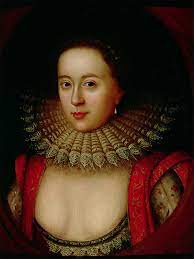
Frances Howard

I first became aware of the story of Frances Howard at about the time that Michael and I first met, when I was a lecturer in theatre at Reading University, and much of my work was focused on early C17th theatre. Contemporary events are often referred to in plays of the period. Aspects of Frances Howard’s extraordinary story are alluded to (albeit thinly disguised) in several plays of the period – perhaps most notably those by Ben Jonson, Thomas Middleton and John Webster. Frances Howard was the daughter of Lord Thomas Howard (Earl of Suffolk). In 1604, at the age of fourteen, she was married to Robert Devereux, 3rd Earl of Essex, who was about six months younger than her. The arranged marriage was intended as a political reconciliation between two immensely powerful families. But the marriage was a disaster. Despite his inability (or unwillingness) to consummate the marriage, Essex became intensely jealous of his wife’s popularity at court, and he insisted she leave London and live at Chartley Manor, his moated mansion house in Staffordshire, where Mary Queen of Scots had been held under house arrest immediately prior to her execution. Frances was there for much of the summer and early autumn of 1611. 

On 25th September 1613, her marriage was annulled, and thus she became the first Englishwoman to successfully seek her own divorce – but in a deeply misogynist society she paid a terrible price for her fierce intelligence and independent spirit. Two years after marrying her second husband (Viscount Rochester, formerly Robert Carr) she was accused of murdering Sir Thomas Overbury, who had been imprisoned in the Tower of London on a charge of treason. No evidence was produced at her trial which would stand up in a modern law court, and she was not permitted to defend herself despite having to suffer a stream of damning accusations which amounted to little more than malicious libels. The central argument against her was that she was a ‘creature of the deed’ – meaning that if she dared to initiate her own divorce proceedings, then she must be capable of murder.

The story fascinated me for numerous reasons. Frances’s trial revealed so much – not only about misogyny, but also about corruption at the heart of the Stuart court. I was intrigued by the parallels with our so-called ‘modern’ times. Frances was treated as a femme fatale who was branded by her prosecutor as so evil that she wasn’t allowed to speak in her own defence at her trial. The murder of Sir Thomas Overbury resulted in the execution of four ‘bit-part players’ and the imprisonment Frances and Rochester (by then they had become Earl and Countess of Somerset). Frances pleaded guilty to the charge of murder, though it seems likely that this was a kind of plea-bargaining because by then she and Rochester had a daughter, and the family was allowed to live together in relative comfort in the Tower. That in itself is very strange, for if they had been genuinely guilty of murder they would almost certainly have been executed. After seven years in the Tower, however, they were pardoned by King James, and released.

All of this intrigued me, although I had no idea how I would write a novel about it – until I came across rumours in contemporary pamphlets which referred to persistent rumours that Frances was seen in and around London during the period when Essex kept her under virtual house arrest at his mouldering manor house in Staffordshire. There is no evidence in the historical records that she was spirited out of Chartley, but for me it provoked ‘the big suppose’ that gave me starting point for the novel that became The Invisible Exchange. 

Points of view

When Michael and I first met, we naturally talked about shared interests. One of those interests was the theatre of Ben Jonson. Jonson was a complex man who wore his contradictions proudly. In some ways he was a conservative. In his poetry he often champions the stability of an old order, but in his plays he positions those from the underclasses and in the social margins at the very centre, he gives them real agency and invests them with wit and energy that far surpasses their social ‘superiors’. As Peter Barnes (who also participated in that conference) put it: 'Jonson never writes about Kings and Queens, that whole moth-eaten hierarchy of privilege and incompetence, but about people like us, working people who work to live...' (1). It was exactly those qualities that appealed so much to me and which also attracted me to the work of Border Crossings, for one of the defining characteristics of the company’s work is the desire to give voice to those who have been socially, politically, historically and geographically marginalised.

Although Frances Howard was an aristocrat (her family was said to be one of the wealthiest in the Kingdom) she has been marginalised by the Jacobean ‘justice’ system and by historians until very recently. I was interested in the way the story revealed the ways that institutionalised misogyny vilified and silenced her. (2) I started on a version in which the story was told predominantly from her point of view, but I found that didn’t enable me to reveal the mechanisms of that misogyny. I continued working on the novel in various different versions over many years, setting it aside for long periods while I worked on other projects, then returning to it. It was there in the background while I worked with Border Crossings on the two Homer plays and on The Promised Land project.

The workshops with Zoukak Theatre in Beirut (3) had a profound impact on me, and on the development of This Flesh is Mine. I took a series of early drafts of scenes which I imagined would form the spine of the finished play. As in The Iliad itself, these episodes were predominantly from the point of view of Achilles. In response to those workshops the play changed in many ways. As I wrote in an earlier blog:

Perhaps the most important single change in my thinking was to realise the importance of Briseis in the narrative. She is only mentioned twice in The Iliad – in the opening pages and the final pages. The … ‘spine’ of scenes referred to above… now becomes what is effectively Act One – which is set in an ancient world.  The characters – Achilles, Agamemnon, Briseis, Hecuba, amongst others – continue through to the second act; which is set in a modern world. In Act One, the modern bleeds into the classical; and in Act Two, the classical bleeds through into the modern. And what starts with Achilles as the central character … gradually shifts focus to Briseis and Hecuba. (4)
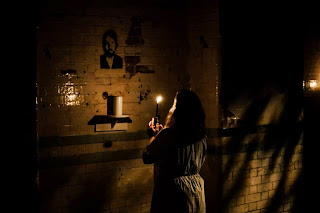
This Flesh is Mine

The conversations with Michael and with the workshop participants at Zoukak (and at a later stage with the Palestinian actors of Ashtar Theatre) resulted in major changes to the play that became This Flesh is Mine. On a more sub-conscious level, these conversations affected my thinking about the historical novel (which was gently simmering on a back burner at that time). When I returned to working on it, I knew that I needed to use a different narrative voice, to find a central character who would have the potential to engage a reader through an unusual perspective – in short, an equivalent to Briseis. He or she would be an outsider, who had access to the corridors of power, who knew the world of the Jacobean court but was not part of it. I wrote several chapters from the point of view of a gentleman usher. I wrote chapters through the eyes of Frances’s personal maid. But found that their social roles made them too passive. They could observe, but not affect what they saw. I needed a character who could exert more agency. 

And so, after several false starts, I experimented with telling the story through the eyes of a character who had been a relatively minor player in earlier drafts – Matthew Edgworth, a rogue and a fixer who’s employed by Rochester to enable his affair with Frances. Matthew is a fictional character, although the world he inhabits is thoroughly researched. In the novel he talks briefly about how much he learnt from going to the theatres from an early age. I didn’t consciously create him in the tradition of those Jacobean malcontents who breathe such wit and dark energy into some of the plays of the period – for example, Edmund in King Lear, Bosola in The Duchess of Malfi, Flamineo in The White Devil (both by John Webster), De Flores in Middleton and Rowley’s The Changeling – but that is what Matthew became, a cross between a malcontent servant determined to break the glass ceiling and a Jonsonian trickster. As Matthew puts it (for the novel is written in his voice), “I’ve never had my master’s looks but I’m no fuckwit. If a smockfaced page can rise to favour, I too can make my way in the world, even if my scarred face will never decorate the pillows of the powerful.” Matthew’s story began to develop a life of its own. The overweening ambition and ruthless cunning that he’s inherited from his dramatic ancestors drives the novel’s plot, but it also serves an additional function, giving him access to the palaces and grand houses of the aristocracy, as well as the murky underworld of Jacobean London – the taverns, the gambling dens, the brothels and the prisons. 

When Nobody Returns – seeing from inside and outside

Although I cannot identify a specific moment during the development process for When Nobody Returns which is an equivalent to those workshops with Zoukak, it’s clear to me with hindsight that the discussions with Michael and the cast, and with the workshop participants (5) led me to write a play in which each of the three central characters, Telémakhos, Penelope and Odysseus, is in some ways an ‘outsider’. Telémakhos and Penelope have been forced to become outsiders in their own homeland because of the occupation. At the start of the play (and of The Odyssey) Telémakhos is twenty years old, the same age his father was when he left home to fight in the Trojan War. He hears rumours about his father, and is determined to discover the truth about them, so he leaves for mainland Greece to seek out those who knew his father. His identity is bound up with knowing his father, living up to (or living down) the stories he hears about him. When he reaches the court of Menelaus he becomes a stranger in a strange land, and on returning to Ithaka and finally meeting his father, his sense of self, of what is right, of what is necessary to rid the island of the occupation, is profoundly challenged. 
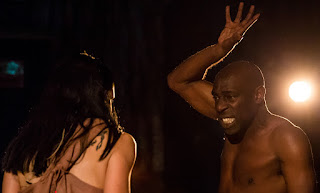
When Nobody Returns

The main character in When Nobody Returns may be Odysseus, but the point of view in the play shifts. We see the occupation of Ithaka through the eyes of Penelope; and, as in Homer, it is Telémakhos’s curiosity that takes him to the court of Menelaus, where he hears stories about his father. Penelope has become an outsider in her own home, and her attempts to subvert the occupation are important – for what they reveal about her strength, and also for what they reveal about the inhumanity of the occupation. Telémakhos is an outsider in search of the ‘inside’ information that will lead him to his father. And his father, Odysseus, is a stranger to himself, struggling to come to terms with his own identity as he battles those demons that still haunt him after his experiences of war. And throughout the play there is a continuing interrogation of what we mean by home – what draws us back, what keeps us away, and what happens when the solid certainties of home become unstable, whether through occupation or trauma.

Thematically, a number of similar concerns run through The Invisible Exchange. Matthew Edgworth is both an insider and an outsider. Like Odysseus, he’s a shape shifter, a master of disguise who can adapt to different social situations; and like Odysseus, he’s renowned for his cunning, but he is a dangerous man; a danger to others, and ultimately a danger to himself. But there are also echoes of Telémakhos in his characterisation. For all his roguish cunning, there’s a softer side to Matthew than the character he seeks to present us with. As Kate (Frances Howard’s maid) says to him: ‘You are not so heartless as you pretend.’ And the relentless curiosity he shares with Telémakhos makes him open to the different cultures he encounters. He’s successful as a trickster because he can use the desires of those he’s gulling against them. But to do that successfully, he has to be an attentive listener and to think as others think As he says about working for Rochester, ‘… the trick of it was to plant the seed, give it time to grow, then be astonished at his razor wit as the seed sprouted and the plan became his own.’ In the course of the novel, he meets four strong, powerful women, each from very different backgrounds: Frances Howard, the aristocrat; Alice, a woman he finds working as a prostitute; Kate, Frances’s personal maid; and Hannah, a cunning woman. He assumes he can manipulate and exploit them. But each of them challenges his certainties. Despite thinking he can work for Frances as well as Rochester, that he can play them off against each other to his own ends, he realises that Frances is ‘as ruthless as any of the men in her family, and far shrewder than her lover or her husband.’ I’ll leave the reader to discover how Matthew is confounded by his dealings with Kate and Hannah. It is, however, important to mention Alice, for her character evolved in response to our experiences of The Promised Land project. Matthew first meets her when he visits a brothel, ‘the House at the Sign of the Vixen in Petticoat Lane. I’d come to see Diego, the broker for the house. He owed me favours.’ Matthew sees a common prostitute. Alice, however, is not what she seems. As she herself says, ‘No matter where you found me, I’m no whore. And I cannot be bought.’ She refuses the easy labels that society assigns to her, and gradually we (and Matthew) discover her history. The large-scale settlement of Huguenot refugees in Spitalfields did not take place until the 1680s. But the persecution of Protestants in France and Holland had started long before that. This novel speculates that some families, such as Alice’s, had already tried to settle in the area in the early seventeenth century. By the time we were working on The Promised Land project, I had begun to make real progress with The Invisible Exchange. But Alice was still a walk-on role. I had always thought of her as intelligent and spirited, but hearing so many stories of real refugees, told with such passion and dignity, I felt compelled to allow Alice a far more significant role in the novel than I had originally conceived. It was the role her story demanded. I conceived of The Invisible Exchange as the first novel in a trilogy. I am currently working on the second, Creatures of the Deed. The character of Alice has now become so important and her story so urgent that the third novel in the trilogy (provisionally entitled The Turbulent Surge) has Alice as the central character and narrator. She will get to tell her story. 

Work that changes us

One of the things I have most enjoyed about working with Michael and with Border Crossings has been the sense that the work we’re doing may be for others, but it changes us. The process itself is always a discovery. Crossing borders – our own as well as those imposed by others (political / social / cultural) – is at the heart of the work. I have been challenged and my work has been enriched by the collaborations. In The Invisible Exchange, Matthew’s attitudes and assumptions are of his time and his place, but he sees possibilities, and he acts on them:

‘I liked the way Hannah thought. Stay alert to possibilities. When Lady Luck smiles, be sure to smile back and accept what she’s offering with good grace, for she’ll turn on you and damn you quick as blink. You see a possibility. You make it happen.’

The Invisible Exchange is now available in paperback from all bookshops, and in all e-book formats from 28th July.

1 Extract from the text of  Peter Barnes’s illustrated lecture on Jonsonian comedy at the Reading Conference on 10th January 1996.


2 David Lindley’s excellent book, The Trials of Frances Howard (Routledge 1993), offers a closely argued and rigorously research analysis of this institutionalised misogyny. 


3 The workshops in Beirut were funded by The British Council. The original intention had been for Border Crossings to co-produce with Zoukak. For logistical reasons that proved impossible. 


4 Michael has also written a blog about the process of working with Zoukak.


5 The key workshops that informed the development of the play took place in Salisbury with young people from military families, and with Palestinians at a summer school held in Jordan under the auspices of the Al Qattan organisation.


Tuesday, November 08, 2016

A letter from ASHTAR Theatre

Iman Aoun of ASHTAR Theatre in When Nobody Returns
The text below is an open letter from our friends and collaborators at ASHTAR Theatre in Palestine.  Iman Aoun (Artistic Director) and Bayan Shbib have been working with us for the last two months on PLAYS OF LOVE AND WAR: and the company as a whole has been engaged with this project since 2014, most importantly hosting the rehearsals and opening performances of THIS FLESH IS MINE at their Ramallah base.  This is an incredibly important theatre company - one of the most important in the world - and now they really need our support.  

Colleagues and Friends of ASHTAR Theatre
Friends and Supporters of Palestine throughout the World

Ever since its establishment as the first drama teaching institution in 1991, ASHTAR Theatre with both branches in the West Bank and Gaza, gave scores of artistic theatrical presentations that earned a number of local, regional and global prizes. It helped bring Palestine’s message to the whole world in a civilized, humane and refined artistic means. Starting in 2010 ASHTAR Theatre launched an artistic global program designed to bring the voice of Gaza’s children to world forums with a view to lift the siege laid to it entitled the “Gaza Monologues”. We were honored by the participation of a number of theatre companies around the world to this program that ASHTAR Theatre launched in the city of Ramallah and Gaza to tour the world, passing through the United Nations.

In addition, ASHTAR Theatre graduated hundreds of students who gained social and artistic stature. They established new theater companies in the country. ASHTAR Theatre was also active in the introduction of drama in governmental and private as well as UNRWA schools starting in 2002. At the onset of 2012 ASHTAR Theatre administers a long term national programme in collaboration with the Ministry of Culture and Higher Education and other bodies with a view to provide training to “drama teachers” in Palestinian elementary schools.

For the last four years, ASHTAR Theatre has been facing dire financial difficulties that bar it from carrying on with its artistic and national journey, unless it obtains material support to offset this financial predicament.

We, at ASHTAR Theatre, administrators, artists, students and graduates contact you, the friends of ASHTAR and of Palestine, beseeching your support to enable keeping our Theatre doors open for the service of our children, our youth and our audiences spread throughout the entire Palestinian Territories. Any financial support geared towards us helps that purpose. Our campaign, today, aims at securing US$ 150,000, the amount of an accumulated deficit represented by the rental of the Theatre premises for the last three years and the operational costs of the institution in both branches, in the West Bank and in Gaza.

Should this amount be secured, it will greatly assist ASHTAR to continue in its existence and proceed with its operations in embarking on new programmes and doubling its presence as an important drama forum in Palestine.

We sincerely appreciate any efforts and contributions made to save this institution from eclipsing and help it maintain alive its message for Palestine.

For those who wish to assist ASHTAR Theatre, please contact us at the following e-mail address to provide you with the means of contribution.

info@ashtar-theatre.org

Best regards to you.
ASHTAR Team and Students


Tuesday, November 01, 2016

The Theatre under the Motorway

When Nobody Returns - Iman Aoun and David Broughton-Davies

When we first presented This Flesh is Mine, back in 2014, we used all three spaces in ASHTAR Theatre's lovely Ramallah space, and a fabulous London venue called Testbed 1.   We always knew that Testbed would be a one-off: the bulldozers moved in back in January, and it's doubtless well on the way to becoming a set of desirable dwellings.  So we've been resourceful again - and found a space under the Westway, just along from the bar where Elliot Tupac painted his extraordinary mural during Origins 2015.

The bay under the motorway is large.  You can see the concrete slabs that are the foundation of the road above your head.  Our set, which uses two raked stages facing one another, looks as if the road has fallen in and smashed in the space.  Cladding is ripped and incomplete.  Everywhere there is a sense of wreckage and of provisionality.  The perfect space, in other words, for a pair of productions about war and occupation.  Palestine too is a space with far too much wreckage, and a space where everything is provisional and nothing stable or secure.

The great bonus of a found space like this is that it allows us to play to the epic qualities of Brian Woolland's Plays of Love and War at the same time as being very intimate with the audience.  There are some scenes that take place at height and distance - there are others which happen within touching distance of an audience that is never more than four rows deep.  This is fantastic for the thematic concerns of the plays, which move constantly between the personal and the political, as they explore the impact of war and violence on the lives of fragile individuals caught up in the power of global forces.

When Nobody Returns - Bayan Shbib and Andrew French
As well as being large, the space is also unforgiving in terms of sound.  The Westway itself doesn't make much noise - amazingly - but the area around sometimes does, and the concrete space doesn't resonate at all for voices.  So we have had to develop a sound design solution, and actually this too has become a contributor to meaning.  The actors have been brilliantly miked by Hannu Kuosmanen, and Dave Carey has created an almost continuous soundscape into which their treated voices are injected.  Often you don't even realise there is artificial sound - but there is enough to counteract the motorway and to generate an ambience that supports the voices.  Hannu's mixing of the quadrophonic speakers allows the vocal sound to seem to be coming directly from the actors' mouths, even when they are very close to you.

The space is full of challenges of course - but challenges are often what lead to brilliant creativity and to exciting solutions. The audience and the reviewers have certainly loved this space.  In fact - I find it very hard to imagine how the plays could be done in a conventional theatre....

More info and booking links here!

Tuesday, October 25, 2016

Palestinian approaches to plays

When Nobody Returns - Iman Aoun as Penelope
In a talk we did on Saturday, between the two Plays of Love and War, Palestinian writer Ahmed Masoud suggested that Palestinian theatre-makers have a very distinct approach to dramaturgy and playwriting.  The reason there are no famous Palestinian playwrights, he said, was not that there are no good writers, but that they work collaboratively with actors and directors.  Perhaps, we speculated, this has something to do with the huge importance of building community in Palestine.  And perhaps it also relates to the resistance to authority that comes with that community's oppression.

On one level, this collaborative approach to dramaturgy is very close to what we have been evolving at Border Crossings for some time - we balance devised work with authored plays, and we deliberately work with writers like Brian Woolland who have a collaborative approach to authorship and are open to changes, sometimes very radical changes, as a result of the rehearsal process.  Brian has already written about the evolution of the plays on the dedicated blog.

Working on these plays has been even more complex than we're used to rehearsals being - and I found Ahmed's comments very helpful in understanding what we've been engaged with.  For a Palestinian company like Ashtar, there is a huge political meaning in every action that we present on stage.  It is not enough that something is dramatically potent or psychologically truthful - there is always the sense that the audience will read something in relation to their position under occupation and the way they respond to that.  So, when a character emerges from warfare covered in blood, that could be read as suggesting he is a maniac - a smaller amount of blood suggests he is engaged in violence at a level where he can retain some rationality.  It's very complicated and nuanced.

Time and again in rehearsals we have found ourselves asking "What are we actually trying to say?"  In many situations, I would regard the question as invalid - if we could say what we wanted to say, we wouldn't need the play, with its ambiguities and contradictions, through which to say it.  But, in this case, it was very often exactly the right question, because it allowed us to weigh our actions and decisions in relation to the wider political context.  What will the audience - this UK audience in London - feel about the Middle East and our own role there at the end of these performances?

Tomorrow is press night.  After that, we may know the answer.

You can book by clicking here!


Saturday, September 24, 2016

The Brussels speech

A speech given by Michael Walling to the EU's OMC group on the role of Culture in the Refugee Crisis: 14th September 2016.  


Good morning everybody – my name is Michael Walling and my friend and colleague here is Rosanna Lewis. We are very grateful to you for this opportunity to present the report on behalf of the Voices of Culture Structured Dialogue Group on the Role of Culture in Promoting Inclusion in the Context of Migration.

We are particularly grateful to the Structured Dialogue group for taking the shocking decision to choose as their representatives today two citizens of the United Kingdom. Not only is ours the only member state that is not taking part in this OMC group – it is also the only member state whose population has voted to withdraw from the entire European project – albeit by a very small margin in a non-binding advisory referendum that has yet to be debated, never mind endorsed, by our sovereign Parliament, the bulk of whose members in both houses are much opposed to its result. Just saying….

If the UK’s political class was largely in favour of remaining in the EU, the cultural sector was overwhelming so – and across the country, people working in the arts were devastated, disoriented, bereaved by the referendum result. In the cultural sector, the European project is deeply admired and loved – loved because of its idealism. Because it is fundamentally about an openness to the Other. Because it generates new channels of communication and intercultural dialogues, building empathy, understanding, a sense of common humanity – and peace.

These are also the great virtues of the arts and culture themselves. These are the reasons why the European project is at its heart a cultural project, and why culture has to be at the centre of all the EU does. And they are also the reasons why culture is so fundamental to the great challenge currently faced by the continent around migration and refugees.

This year, renegade Britain has been commemorating the fourth centenary of the death of William Shakespeare – whose theatre, even now in the 21st century, remains the model for truly inclusive, transformative and politically impactful cultural practice. Shakespeare’s theatre was called The Globe – it was not called The Island – and it was emphatically about creating an open space in which people from a huge range of backgrounds could come together and encounter people who were different from themselves. He puts into public space the elderly, the mentally ill, gay people, transgender people, the homeless, the displaced, Africans, Muslims, Jews. And in every case, he invites us to see beyond the simplistic label and into the common humanity that we share:

“If you prick us, do we not bleed? If you tickle us, do we not laugh? If you poison us, do we not die? And if you wrong us, shall we not revenge?”

If Britain really wants to celebrate Shakespeare, then it needs to celebrate the European, the humanitarian, the dangerous border crosser. If we reject Europe, we reject culture. If we reject culture, we reject humanity. And if we reject humanity, then we will reject the refugees.

Both Rosanna and myself have been working on projects that run counter to this deeply disturbing trend. Rosanna works with the British Council, and has been one of the driving forces behind “Queens of Syria” – a theatre project that brought a group of Syrian refugee women to the UK, where they were able to tell their own, very personal stories of displacement and loss. And on Monday, I will be starting rehearsals for a pair of new plays jointly produced by my company Border Crossings and Palestine’s ASHTAR Theatre – plays that feature alongside professional performers from the UK and the Occupied Territories a Community Chorus of refugees. The plays, called “Ilium and Ithaka: Plays of Love and War”, are based on the founding myths of European culture – Homer’s Iliad and Odyssey. So the first play is about what it feels like to be caught up in a seemingly endless cycle of violence – and the second play is about what happens in the wake of war: post-traumatic stress, families rent apart, displaced people on the sea. At the very source of European culture, Homer speaks to the refugee experience of the current moment:

“If any god has marked me out again
for shipwreck, my tough heart can undergo it.
What hardship have I not long since endured
at sea, in battle! Let the trial come.”

You’ll be pleased to hear that the Structured Dialogue group does not consist entirely of Europhile Fifth Columnists fleeing Brexit Britain, but is in fact very diverse, covering a range of sectors and member states. It’s particularly important that the group includes two people who are themselves from refugee backgrounds. One of these is a musician from the Southern Sudan: the other is a museum worker who now lives in Slovenia, where she fled with her family during the wars in former Yugoslavia. The testimonies of refugees from European conflicts – quite recent ones – are a very important resource in dealing with the current crisis. We need to listen to them when they tell us “The moment it all went wrong was when people started saying ‘Let’s segregate all the Muslims’.” If we allow the new citizens of our continent to be “Othered” in this way again – and it is already starting to happen, more than starting – then we could be looking at another Bosnia. The great symbol of the Balkans conflict is the destruction of the beautiful 400 year-old bridge at Mostar: a bridge of no real strategic importance but of great symbolic, cultural value – because it was built by Muslims, and because it was a bridge – a means of connection across a chasm. Fear and hatred destroy bridges: our role as artists and as cultural policy-makers is to build and re-build them.

When the Structured Dialogue group – 33 people from across the continent, very few of whom had even met before - came to Brussels in June, we had only two days to address these incredibly complex and important issues, through what was in many ways an Open Space approach. Those of us who led particular discussion groups within that process have, slightly by default, ended up as the final authors of this report – but we have endeavoured to make it genuinely reflective of the many distinct voices in the room. Before the meeting, we had already been sent, and had given our individual written answers to, three framing questions from the Commission:

• Which recent initiatives best demonstrate the successful role of culture in promoting the inclusion of refugees and migrants? What were the key success factors and have these been
evaluated?
• What are the best ways to organise cultural activities to do this on arrival and after six months?
• What are the strongest arguments that can be made for the use of culture in this way?

While the three Parts of our report do not exactly follow this structure, you can see it underlying the main themes that have emerged. The first Part, dealing with the reasons why culture is such a crucial element in the creation of inclusive societies that embrace migration, is very rooted in specific evidence of projects known to the group from across Europe and indeed beyond. The third Part is about the crucial question of evaluation and how we can measure or assess the impact that cultural initiatives have in developing open and inclusive social and political spaces.

However, we did not entirely follow the structure that had been suggested, in that we felt it concentrated almost entirely on cultural work directly with refugees and migrants, rather than work about relating them to their new host societies. Our report does not in any way deny the value of direct cultural interventions – indeed, it is full of examples of projects that have enabled refugees and migrants to acquire language skills and cultural understanding, to recover from trauma or to develop their employability. But we were also mindful that such an instrumental cultural offer, presented on its own, could be understood by refugees and migrants as a simplistic programme of cultural education, even of indoctrination, positing an inflexible and monolithic European culture to which they, as new arrivals, are obliged to conform. It could be thought to place all the responsibility for learning and adaptation on the migrants themselves.

Cultural rights are human rights, and if people feel that their culture is somehow being rejected - that they are being asked to adopt a completely different way of being – they are likely to resent that. Research has shown that it is a sense of cultural rejection that fuels radicalisation: conversely, people who feel that they are accepted in a community for who they are - are not going to blow it up. And so we also emphasise the importance of cultural and artistic initiatives to introduce the migrants and refugees, their cultures, their stories and their sheer humanity, to the existing European public.

Building bridges. Narrating voyages. Embracing Globes.

Work of this kind is not just about generating the conditions in which new citizens can be accepted and included in European societies. It is also about enriching those societies. Throughout our history, cultural Renaissances have happened when existing cultural traditions come together, and people see all the exciting things that other people do – their imagery, their music, their dances, their poetry, their food. And so Part 2 of our report looks at the potential for art and culture to catalyse positive social change in the context of migration; to affect real transformations in peoples’ minds, hearts and lives; and even to create new policy.

In fact, I would say that only culture can do this – because culture is the only space where we can meet our new neighbours on an equal footing. Because politically – there is no equality. And economically – there is no equality. And socially, perhaps educationally, certainly in terms of health and wellbeing – there is no equality. But in the sacred space of art and culture – there everyone has a voice. So it is in the cultural space that we must begin.

Saturday, January 02, 2016

2015

The Voladores at the Origins Festival.  Photo: John Cobb.
The year that has just ended was in many ways a very depressing one for anybody involved in intercultural dialogue and progressive politics.  The institutionalised terror of Daesh, particularly as made manifest in the Paris attacks, underlined the total failure of the West to build bridges with the Islamic world.  The response has been simply to escalate the cycle of revenge and confrontation: anyone who seeks to understand why these things are happening is castigated as somehow sympathetic to mass murder.  At the same time, we are witnessing an ever-growing humanitarian crisis, and the British (and European) inability to respond in any but the most narrow-minded and divisive terms is pitiful to behold.  Nicholas Winton, who died in 2015, showed how a civilised society should respond to the spectacle of desperate people fleeing from persecution and death.

The other great crisis, Climate Change, was the subject of yet more self-interest and short-sightedness on the part of the governments of "developed" countries, in the Paris trade agreement that they claimed was an Environmental treaty.  In spite of a huge presence and intense lobbying by indigenous peoples, the voices of cultures with real environmental understanding were entirely ignored, passed over in the interests of capital.  Humanity's failings this year leave me wondering how many more years there will actually be.

And yet, during our work this year, I have time and again felt a renewed optimism and a sense of change in the air.  The Origins Festival during the summer was the largest gathering of indigenous peoples in London ever, with truly extraordinary work on show, and a real feeling that the time had come for these formerly oppressed cultures to reassert themselves in the global space.  The festival embedded itself into the city more deeply than ever before, with entire schools coming off timetable to take part, the British Museum being shaken by the ancient rhythms of Torres Strait dance, and open spaces being regenerated through the healing rituals of the Voladores de Papantla.  The Festival also included the two most important pieces of theatre I saw this year - hopefully I can say that without sounding too arrogant, as we didn't make them ourselves, but curated them!  Oxlajuj B’aqtun, by the Guatemalan Maya company Grupo Sotz'il, was actually about the change in the Mayan calendar, and their sense that a new period of history is slowing coming about, one that will see a more environmentally aware, just, and egalitarian society.  Beautiful One Day, by Australia's Ilbijerri,  placed current cross-cultural tensions into a longer historical perspective, and offered the long view of the Elders as a way of looking not backwards, but into the future.

That same spirit has been informing our Heritage work over the last few months, with the development of our Oral History archive around the indigenous presence in London.  2016 will see our first documentary film, on this same subject.  It's an exciting development in our work that we are collaborating so much with Museums and historians - many of our projects in development are about reclaiming forgotten histories and so re-imagining potential futures.  It's an approach close to the heart of everyone at Border Crossings, including our Patron Peter Sellars, whose talk at Rich Mix was a highlight early in the year.

2015 also saw us developing a new play with Brian Woolland - a sequel to This Flesh is Mine, which had a rehearsed reading at Salisbury Playhouse in the autumn.  Entitled When Nobody Returns, this play will be the Odyssey that follows our Iliad.  After the war, there come the stories of returning soldiers, of displaced people, of broken relationships, of lands occupied and peoples dispossessed.   Our plan is to work with our partners at ASHTAR Theatre in Palestine to present the two plays in rep during 2016 - so look out for an inspiring and important response to all that is happening in, and emanating from the Middle East.

2016 is also Border Crossings' 21st birthday - and there are some very exciting celebrations being planned.  Like all times of trouble - this change of year is also a time of hope.

Happy New Year.

Saturday, March 21, 2015

Why I am not boycotting Israel

A wounded boy in Ramallah
So - Netanyahu has been re-elected.  It is truly extraordinary, and terrifying, that a democratic process should lead to victory for a leader who was responsible for the deaths of more than 2,000 Palestinians, of whom over 500 were children, in Gaza last summer; a leader who has categorically rejected any possibility of self-determination for the Palestinian people; a leader who seems determined to agitate for war with Iran.  There is something rotten in the state of Israel.  It comes as no surprise to me that many of my distinguished colleagues in the field of art and culture, including personal friends and artists whom I admire very deeply, have chosen to signal their boycott of the country.

I was asked to sign this pledge.  I thought about it very hard: agonised, actually.  And, in the end, I decided not to.  It was a very difficult decision - not least because so many people expected me to do it.  After all, our most recent production, This Flesh is Mine, was presented jointly with a Palestinian company, Ashtar, and we made no secret of our political position.  We rehearsed the play in Ramallah, where we saw at first hand the indignities heaped upon the Palestinian people.  We shared the horror of the oppressed when Mohammed Alazzeh, the teenage brother of one of our actors, Razan Alazzeh, was shot by the Israeli military.  Surely, of all British artists, I should be the one to pledge my cultural boycott of the oppressor?

But people's expectations of your political position cannot in themselves dictate that position.  As Kazuo Ishiguro recently said:  "We’re well-meaning, but most of us are just being swept along. We’re not sitting down and really examining why we’re taking certain stances. We belong to certain tribes, and there’s always the correct slogan and position on every issue for our little tribe." Uncomfortably, on this issue, I find myself out of step with my tribe.

This is not to say that I don't, in some ways, boycott Israel already.  I avoid buying Israeli goods - in fact,  I've got that down to a bit of an art.  Barcodes often give away products that otherwise hide their Israeli origin: it used to be 729, then, in an attempt to circumvent the boycott, it was changed to 871.  I actively seek out Palestinian goods: the olive oil is superb.  It is part of the little I can do to boost the Palestinian economy and to undermine the aggressors'.

I do not, however, regard a cultural boycott as a logical continuation of an economic one.  To do so is to reduce culture to another commodity - and there's far too much of that going on already.  Culture is not the same as olive oil.  Indeed, it would be my contention that culture is one of the few human activities that might actually do some good in this appalling situation, and that for artists to withdraw their services in this way denies the value of who they are and what they do.  Art, theatre, performance - these things are about the generation of empathy.  They allow us to see the world from somebody else's point of view.  They generate a sense of common humanity.  In a place where a regime's propaganda systematically de-humanises those that it oppresses, there can be nothing more precious than this.  If moderate Israelis - those who are critical of Netanyahu and his hawkish retinue - can be supported by the words, the presence and the emotional force of international artists and particularly Arab artists, will this not be of value in overturning the lies on which the regime is built?

My tribe - the moral, principled people who signed the pledge - often cite the downfall of apartheid as evidence that cultural boycotts do have some efficacy.  Personally, I rather doubt that the refusal of certain performers to play Sun City was really instrumental in that process.  What brought about change in South Africa was partly the sense that, with the fall of the Soviet bloc, the apartheid regime no longer stood as a bulwark against the perceived advance of communism in Africa; and partly an awareness of the regime's moral bankruptcy, engendered by vociferous opposition both within the country and internationally.  You could, of course, argue that the boycott was an important part of the latter - but my assertion would be that the really important role played by culture was in fact an active one, rather than passive withdrawal.  The work of politically engaged artists like Athol Fugard, John Kani, Winston Ntshona, Nadine Gordimer, Maishe Maponya, Gina Mhlophe, Barney Simon, Eugene Skeef, was hugely important to the raising of understanding and awareness across the country and internationally.  It did this because it operated across the racial divide, and in itself demonstrated the potential for a different political model.  It told the world about apartheid, yes - but it also did so much more.  It helped to imagine a world beyond that tarnished present, to dream a common future for a divided and disoriented humanity.

So my contention would be that we need more cultural engagement with Israel, not less.  We need them to hear our voices, the voices of the Palestinians they oppress, the voices of the Iranians they threaten.  If they hear those voices rich in warmth and humour, in grief and pain, in sorrow and in anger, through theatre and poetry, painting, song and dance - then they will hear the call of our common humanity.  This is, of course, a statement of faith; but if I did not have faith in art and humanity, then I would not be an artist.  That is why I cannot renounce this belief in the power of art to effect real change.  I shall never renounce it.  Even if that leaves me separated from my tribe.  My friends.

It has been wisely said that "If you want to make peace, you don't talk to your friends.  You talk to your enemies."  And do you know who said it?  Moshe Dayan.

Wednesday, December 31, 2014

2014

This Flesh is Mine.  Photo: Richard Davenport
It's been the year that the blog posts got fewer but longer.  Less to do with simply reporting what we've been doing - I guess Facebook and (even more) Twitter have well and truly usurped that function - more to do with commentary, discussion, and engaging in controversies.  And there have certainly been plenty of those.  I suppose it's to be expected, as we began our period of engagement with the Middle East, producing Brian Woolland's wonderful This Flesh is Mine in collaboration with Ashtar Theatre in Palestine.  It's a production of which we are hugely proud, and marks the first in a series of projects around cultural dialogue with this most inspiring and battle-scarred area of the globe.  As the year ends, we are planning its revival, as well as two new productions related to the region, and continuing our community work with Middle Eastern communities and refugees in the UK.  Our community work has been made possible through ongoing support from the Lloyds Bank Foundation - huge thanks to them for allocating funds below the radar, where they don't get publicity but they really do help to change lives for the better.

As part of this engagement in global debates, we've also seen an exciting new development in the Laboratory, with the first of our public conversations around the key issues around our work.  Rustom Bharucha's evening around Terror and Performance was extraordinary and provocative - with lots of stimulation for ways of moving forward our ideas.  In the new year, there will be announcements of further discussions - I can promise fireworks.

It's also been an important year for our work with indigenous cultures.  Origins being a biennial festival had a year off in 2014, but there had to be a lot of planning for 2015, with some really important new partnerships being negotiated.  I'm not allowed to reveal all the plans just yet - but I can offer the teasers that there will be at least one partner of national standing involved, an even greater diversity of countries and art forms represented, and a charismatic figure of global standing to give the Origins Lecture!  So watch this space....

For the last few years, I've used the last post of the year to survey cultural developments and events that I've found particularly exciting.  This year hasn't been the most exciting - perhaps not surprising, given the immense strain on the sector.  There's been a lot of playing safe - and even some of the more radical work has seemed less exciting in terms of content, more in terms of style and technical prowess.  As so often, artists from overseas are showing us what we should be doing.  In one case, Exhibit B, I even had to go overseas to find out, because the show was closed in London in response to protests.  What do we think we are playing at?  This was the most moving piece of theatre I saw all year.  I also loved John Adams' new opera The Gospel According to the Other Mary, stunningly staged by our fabulous Patron Peter Sellars; David Grieg's The Events; and two LIFT shows - Young Jean Lee's The Shipment and the Chilean production The Year I was Born.

Also heart-wrenching was the Belvoir's extraordinary re-imagining of The Wild Duck at the Barbican - I really never thought I would be calling that play an emotional highlight!  Australia also contributed my best film of the year - Charlie's Country at LFF - and two terrific novels.  Fiona McFarlane's The Night Guest is both a touching study of encroaching dementia and a crime thriller - you really don't know what's going to happen next.  Alexis Wright’s The Swan Book (not yet published here but on Kindle) confirms her as a rich and poetic, authentically Aboriginal voice.  The novel is at once political, lyrical, futuristic and rooted in deep, dreaming time.

Another Australian novel won the Booker - but only just.  I loved Ali Smith's How to be Both, which was pipped at the post.  I read Eyes before Camera, and it felt satisfying that way round, with the emotional climax of the end also making sense of the opening.  I'd love to know what it’s like to unravel it the opposite way...  but of course, I'll never get the chance.  You don't quite get to be both.

Happy New Year, everybody.

Sunday, June 01, 2014

The matter of Visas

Edward Muallem and Razan Alazzeh recording a scene for This Flesh is Mine
Now that a week has passed since the last performance of This Flesh is Mine (last for now, I should probably say), I feel I can finally talk a bit in public about the fact that two of our Palestinian colleagues, Razan Alazzeh and Emile André, didn't make it to London.  If you came to the show and got a programme, you will have seen that their roles were taken, at the last minute, by two very proficient Arabic actors based in London, Jumaan Short and Tariq Jordan.  Somehow we managed to find them within 24 hours of our return to London from Ramallah - so they had a week to work on the play before it went in front of a London audience.  That happened also to be the week when we were doing technical and dress rehearsals - but it is actually possible for an actor to step in to a production at that stage, because the production itself is already very formed, so they can work everything out much more quickly from all that is going on around them.  I was lucky that the two actors hardly every coincided on stage - so they could respond to other performers who had already worked for a month. All of which meant that Razan and Emile continued, in a way, to be very present in the piece.  Jumaan and Tariq did not give the same performances - far from it - but the ghosts of those performances, and the experience that those Palestinian actors brought to the roles, informed every moment of the play.

What had happened was that their visa applications had been rejected - we found out the morning after our wonderful preview performances in Ramallah, the day before we were due to fly home.  It wasn't a case of direct political interference to prevent Palestinian performers coming to London - though that wouldn't have surprised me in a climate where the ENO was unable to bring Abbas Kiarostami from Iran, and the Lebanese authorities have recently confiscated the passport of Lucien Bourjeily to stop him participating in LIFT.  Nevertheless, it was political, in way that is more subtle and so all the more insidious.

Put simply, the forms weren't filled in correctly.  The Ashtar administrators sent a supporting letter from us, inviting the performers to appear in the play, and ticked the box saying "tourist visa".  They should, of course, have ticked "business".  Why didn't they?  Well - Ashtar previously came to London in 2012, to present Richard II as part of the Globe to Globe Festival; and the events of the Cultural Olympiad were given a special dispensation - a tourist visa and a letter of invitation were considered enough, even for Palestinians.  It's not surprising that, having done this once, the company thought it would be a simple matter to do the same again.

My question is this: why was 2012 a special case?  During the Olympics, we wanted to show that London was an international cultural capital, that it welcomed artists, that it welcomed the world.  But that is clearly not the default position.  In fact, it's just a lie.  For a few weeks, when it suited the PR campaign, the doors were open.  The default position, to which we immediately returned, is one of suspicion and xenophobia.  If there is any excuse not to grant a visa, it will not be granted.

Something similar happened to us in 2007, when a group of Ghanian performers were denied visas because one of them, having been born in a rural area, did not know her date of birth.  On that occasion, the British Council in Accra made the case to the Consulate, and the decision was at once overturned.  This time, even though the British Council was actively (and financially) involved in the project, they could do nothing.  Because the visa service now has very little to do with the Consular Service.  It has been "out-sourced".  Privatised.

The spin around privatisation is always that it saves red tape and cuts costs.  Our experience indicates quite the opposite.  The privatised visa system is clearly much MORE bureaucratic and impersonal than the public one.  It is also much more of a drain on the public purse: the British Council's investment in flights for these Palestinian actors was largely wasted as a result of the visa decision.  So one arm of government undermines another.  Hardly the way to cut the deficit.

Two more facts - just to underline the absurdity of the whole thing.  Razan lives in Paris, though she retains her Palestinian citizenship.  So, when she didn't get the visa, we thought we could simply buy her a connecting flight from Heathrow to get her home.  No.  Palestinians need a visa even to transit through a UK airport.  So that was a whole new flight that had to be bought.  However, one of our Palestinian actors, Iman, was able to travel to the UK with us.  Why?  Because, by accident of residency in the disputed territory of Jerusalem, she is able to travel under an Israeli passport.  And, of course, Israelis can travel to and do business in the UK without a visa.  They are above suspicion.

Saturday, May 24, 2014

Where do you stand?

Iman Aoun as Hecuba.  Photo: Richard Davenport
This Flesh is Mine has been running since Monday, and the response has been overwhelming.  The Guardian has a great piece by Ellie Violet Bramley about the making of the show and its relevance to the conflicts in Palestine, which is the main Editor's Pick today!  It highlights one of the main issues in the production - how it complicates the audience's relationship to the geo-political significance of the Middle East.

What's very exciting, watching the audience in the site-specific space at Testbed 1, is realising how the experience of the production itself leads to specific decisions.  Because there are no assigned seats, and the audience is free to move through the space, sitting or standing as they wish, their view of the events in the play is determined (quite literally) by where they stand.  You can be close to one of the stages, intimately engaged with the scene - or you can take up a perch on a distant sofa; or remain in the first space, seated at a regimented table, deliberately detached from the unfolding action.  You can lean on a pillar, sit on the floor, or move so that your viewpoint changes during the scene.  And all of this is political.

I hadn't planned this.  I had thought that the audience would essentially move in a block between spaces - but what in fact happens is much more interesting.  There is a clear awareness that the dynamics of the space as a whole encourage different types of engagement with the story - and this energy is disturbing and inspiring for the audience.  You become implicated in the piece's Middle Eastern resonance, whether by being detached or by being fully engaged.  The play in any case problematises Achilles' "liberal" stance as the man from the invading force who refuses to fight - and this knocks on into the audience.  It's a really extraordinary thing - and it could only happen in the form of live theatre.

Sunday's show will add to this, when "Two Schmucks, Three Opinions" (blogged here a few months ago) gets presented as a 12 noon show with lunch before the 4pm performance.  It's a fantastic way to approach the debate!

Friday, May 09, 2014

Ramallah audience acclaims "This Flesh is Mine"

Here are a few responses from the audience in Palestine for our previews of This Flesh is Mine.

"Incredible.  I'm speechless in all honesty.  My heart was racing throughout the entire thing.  The emotion was overwhelming.  Tremendously inspiring."
"I loved this play.  It grasped my attention for every second."
"It had so many conflicts and the actors were more than perfect."
"It proves that mythology has been able to address human souls and dilemmas throughout time.  The performance was great."
"An astonishing mixing and understanding of both Israeli politics and the Palestinian mentality and behaviour."
"It is really great to see English and Palestinian actors work together with the source of the great Greek theatre.  We need more co-operation in the future."
"It was treasurable, modern and creative.  The actors were astonishing.  Actually, this is the first time I visit a theatre so I'm happy."
"I think that the play links with our situation in Palestine.  Particularly when it comes to fighting and power relations.  You bring an old story and tie it with the issues of the world nowadays."
"That was the craziest f***ing thing I've ever seen!  Loved the modern elements as the play went on.  Seriously you guys were amazing!"


Tuesday, April 29, 2014

An actor in Ramallah

The skyline of Jerusalem
This is a Guest Blog by actor Gerrard McArthur, who will be playing Priam and Phoenix in This Flesh is Mine.  Gerrard is currently rehearsing the play with Border Crossings and Ashtar Theatre in Ramallah, Palestine.
 
A blazing day in Palestine, green tea with mint, goats bleating on the roof blending with the call to prayer, a sustained, graceful, wandering colour in the white heat.
 
Just snatching a coffee outside rehearsal in the shade - it's remarkable here, to live among the oppressed & to live in a no place; very Augusto Boal... Kindness & life exude from these people like the blooming violet flowers that sprout along the roadside rubble, articulate survivalists, with angry grace.  
 
Traffic more alarming than Rome, a hooting gallery, just about keeping to the roads; pedestrians walking at will as if the raging cars were pesky gnats.  
 
Was in Jerusalem at Easter. Black & white into COLOUR, and frenzy and fervour and focused chaos: a sense of Holy Rock (Gig) about it, packed into the small square of the Church of the Holy Sepulchre, as each religion processes around it and in and out again, in a rough-theatre rotation sounding to the deepest of the Sepulchre's sacred tolling bell, people reaching out to passing sacred objects and then a laughing out to passing processing friends; inside, weeping women at the site of the washing of Jesus' body, a short step away from the crack in the stone of Golgotha, a short step away from the kissing of the true remains of the Holy Cross, a short step away from Jesus' tomb - these biggest events of the Christian story so compressed together in the stone tunnels and broadening archways, it seems like an extraordinary Christian convenience store, like Christo Metro... 
 
In burning daylight the next day back into the narrow confining tunnel-like stone streets of Jerusalem, part bazaar, sometimes walking on shiny rubbed levels of the seven layers of destroyed Jerusalems that are like emerging ribs of the corpse of lost cities, 2000 years old.  
At the top of the narrow walled way that is the Via Dolorosa, we spy a vantage point above us atop the Austrian Hospice, enter in the coolness and climb the stairs of the hushed sanatorium to come out again into the white light on to a wide, flat terrace with a breathtaking David Lean CinemaScope vision of the entire Holy City, astonishingly cramped and crammed, a pressed piling of small rounded cupolas on ancient houses to the dominating Gold of the Dome of the Rock....