Showing posts with label Rustom Bharucha. Show all posts

Tuesday, March 07, 2023

China re-opens

Ningbo Tianran Stage Theatre
This weekend, I was giving an online class to Rose Bruford students. Because the classes are done remotely, there are students all over the world, including China. One of them, Xuyu Zhang, lives in Ningbo, a city to the South of Shanghai where I used to go quite often to lead work for the University of Nottingham's campus there.

The class was about the effect Covid has had on theatre, using Rustom Bharucha's wonderful lecture series as a start point.  Towards the end of the class, the image of Xuyu went dark.  It turned out that she was in a taxi - although the connectivity remained perfect and she was still able to share a presentation while travelling!  She explained that the Grand Theatre in Ningbo was finally re-opening that evening, with a play called The Face of Chiang Kai-shek, and she simply had to be there.  I hadn't really taken into account the different speeds of re-opening, and the huge amount of pressure people in China must have been under as the rest of the world returned to social activity and performance, while they remained in their apartments, masked and isolated.  

As the class ended, the taxi drew to a halt, and Xuyu turned her phone towards the theatre.  She walked up the imposing staircase, and joined the very long queue at the Box Office.  It was wonderful to be there.  

The Face of Chiang Kai-shek


Thursday, December 30, 2021

Looking Back on 2021

CRE-ACTORS:
Participants on the stage of the Cartoucherie in July

In my post looking back on 2020, I speculated that our work (and perhaps the whole form of theatre) would not simply go back to the way it had been prior to the Covid-19 pandemic, but would continue that year's exploration of new forms more suited to our rapidly changing world. What I had not expected then was that 2021 would pass without us being able to present any actual 'theatre' at all - or that I would find myself at the end of this year putting the very word 'theatre' into inverted commas. The form itself seems questionable, unstable. Some companies have, of course, been able to perform in 2021, but they have done so under constant threat of closure, and they have usually been able to do so because they were building-based. For us, there remains very little point trying to plan a production in a conventional performance space, while access to those spaces remains so unpredictable. And so we continue the process of enquiry begun last year, examining how our work can and should evolve in the capricious context of our troubled times. This isn't just about the pandemic, either. Covid has brought into sharper focus two major issues which were already informing our art, and which are now emerging as its core themes. One of these is the existential threat posed to the planet by climate change. The other is the ongoing prevalence of colonial structures, both politically and culturally, which stand in the way of equity, justice and democracy. For the foreseeable future, our work will centre on these three themes:

  • Covid
  • Climate Change
  • Colonialism
On one level, these are all the same theme. They are all to do with the choking dominance of capitalist structures across the world, and they are all to do with loss of breath. Covid-19 attacks the breath; Climate change contaminates the air we breathe; Colonialism cuts off the breath of life from those whose humanity it denies. As George Floyd was choking to death, he managed to say "I can't breathe".


Thinking through these key themes has enabled us to create a very different version of the ORIGINS Festival for 2021-22. It was clear from the beginning that we would not be able to programme our usual two weeks of visiting performances in the summer, and so instead we looked to a full year of programming which would bring Indigenous cultures into a direct dialogue with our own society in Britain. We began with online events, building on what we'd achieved in THE LOCKDOWN DIALOGUES of 2020. The Opening Event was online, and included a performance of Yvette Nolan's KATHARSIS - a play written in response to the pandemic and the closure of the theatres, performed in the deserted auditorium of Winnipeg's Prairie Theatre Exchange by Tracey Nepinak. 


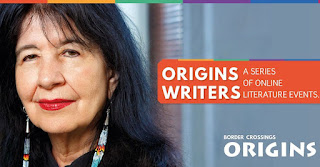
During the spring, we worked with our friends at Beyond the Spectacle to present ORIGINS WRITERS: a series of online literary events, using dialogues with leading Indigenous writers like Joy Harjo (the US Poet Laureate), Natalie Diaz and climate change expert Kyle Whyte to locate ourselves in relation to our themes and to the importance of Indigenous voices to all three. Many of the talks are still available as recordings. This online presence grew with film screenings, including ETCHED IN BONE and UNDERMINED with the Menzies Institute, VAI with Aya Films, and a fantastic evening of short films relating to Animism. We also presented our first online exhibition, featuring Indigenous Taiwanese Women's Art, and partnered with Woolly Mammoth in Washington DC to show an online version of Madeline Sayet's WHERE WE BELONG, which had been such a success at the Globe in ORIGINS 2019. Never shy of controversy, we set up a debate around the film LEPAGE AU SOLEIL, confronting questions around representation and engagement between European and Indigenous cultures.


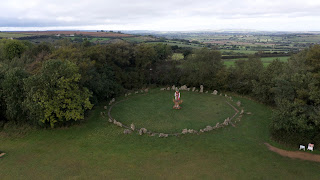
All this online activity provided the cultural and political context, the vital Indigenous presence, that enabled us to undertake live work in new forms. So far, the most significant of these has been TOTEM LATAMAT: carved from a cedar tree in Mexico by Totonac artist Jun Tiburcio, shipped across the Atlantic and journeying through the UK to Glasgow for Cop26, the Totem became a focus for ceremonies and performances they responded to its ecological message wherever it went. Some of these were quite formal: like the Indigenous Fire Ceremony in Glasgow or the Return to Earth in Dumfries. Others were more spontaneous, arising from local communities, like Chiswick School in London or the Milton Keynes Interfaith group.  Early in the New Year, we'll be releasing a film that documents this extraordinary journey - so I won't say more here, except to emphasise that this was every bit as much a performance project as it was a visual art commission. 2022 will see more work like this, engaging directly with communities through Indigenous cultural forms that catalyse their own responses to our key themes, and to the need for change. As our Patron Peter Sellars said in his LOCKDOWN DIALOGUE, we need to think more specifically about the local, partly because the pandemic requires it, and partly because that is where regeneration, both cultural and ecological, can and will occur. One such project that is already underway is BOTANY BAY: a 14-month programme working with schools and heritage partners to explore the Indigenous heritage of horticulture and food production, creating new gardens which will offer healthy and sustainable models of reciprocal exchange between our communities and their environments.


We were already beginning to undertake work of this kind before the pandemic, of course, and its enhanced significance does not mean that we are abandoning theatre. Not a bit of it. As with TOTEM LATAMAT, performance will actually be central to BOTANY BAY, and to the other forthcoming ORIGINS work. I am very hopeful that the Festival will climax with a visiting theatre production, and that the different strands around ceremony, ecology and rebalancing after colonialism will come together in a new piece we're developing with the support of Birmingham's Commonwealth Games Festival 2022. What it does mean is that we are questioning the form more profoundly, developing how it can work in relation to shifting ecologies and histories, balancing our community and international remits. It's therefore really helpful that, through Border Crossings (Ireland) we are undertaking two European strategic partnerships that allow us to exchange good practice with extraordinary partners overseas.  One of these looks at the Third Space as a model for community engagement: the other, CRE-ACTORS, is an exploration of intercultural devising processes.  

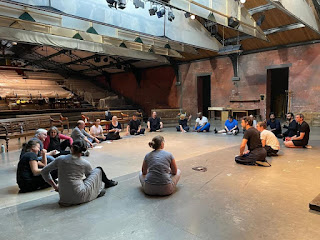
It was CRE-ACTORS that found us, in July, working for a week in Paris on the stage of the Théâtre du Soleil, at the Cartoucherie de Vincennes. As our colleague from the Teatro dell'Argine in Bologna, Micaela Casalboni wrote: "Being on the sacred stage and spaces of Théâtre du Soleil was the dream of many years in my life as an actress and as a theatre maker interested in arts for change – individual, cultural, social change. Admiring the painted walls, the paper lanterns, the costumes, the scenes, the behind-the-scenes, the spaces for theatre and the spaces for the group (the kitchen, the courtyard, the space for the kids…) was not only exciting but moving. Especially after the toughest years that we may remember in our life of individuals and theatre makers, years of closed theatres, years of distances, years with no bodies sharing the same physical space." This celebratory, creative week really did seem to offer a way forward - and we were all incredibly excited to return to Paris in December so as to see the Soleil's new devised piece: L'ILE D'OR. And then Covid swept through the company, causing the shows to be cancelled, and through our different countries, with new travel restrictions. As the year ended, there was still no stability to be found, least of all for theatre.

This year dominated by disease has seen many sad losses to the world of performance - not all from Covid, of course. Helen McCrory, Antony Sher and David Gulpilil are three that particularly hit me: all truly great actors whose presence on stage or screen was an object lesson in what we do and why we do it. Our own circle was not exempt, so let me end this year with tributes to three great friends, each of whom contributed profoundly to the story of Border Crossings:
  • Seun Shote passed away last March, aged only 47. He was an extraordinary actor and a very warm human being, whose performance as Ato in THE DILEMMA OF A GHOST combined great humour with a compassionate understanding of what it means to be caught between worlds. 

  • David Kerr, who died in the autumn, was from the same part of Coventry where I spent my childhood, but lived most of his adult life in sub-Saharan Africa, where he taught at the Universities of Malawi and Botswana. He and his wife Adela were my hosts on a wonderful trip to Gabaronne, where I led a workshop with local performers. We became very close very quickly: he was full of wise and modest counsel.

  • Alaknanda Samarth died on 6th December. For almost a quarter of a century, she had been one of my most  important interlocutors in the exploration of theatre and the intercultural. It was Alak who introduced me to Rustom Bharucha, and Rustom has written a very fine obituary for her. Although we were constantly looking for something we might work on together, it only finally happened in 2020, as a response to lockdown. Alak's recording of Artaud's THEATRE AND THE PLAGUE as a Border Crossings podcast now serves as a sort of memorial, I suppose - emphatically her, emphatically of its moment, brutal in its demands and searing in its spirituality. A few nights ago, I was privileged to share it with a group of her friends and colleagues from India as a tribute. We gathered - as so often these days - on Zoom. We listened to her voice speaking this unique text for 45 minutes. And then we sat in silence - because sometimes that is all you can do. 

Wednesday, February 10, 2016

Brook's Battlefield

Battlefield: Ezy Nzaramba
The late Pierre Boulez, David Attenborough and Peter Brook all seem to be proving it: 90 is the age to be.  Many cultures have known for a long time that we need to value our Elders - at last the West seems to be catching up.  And Brook's production Battlefield, created at the age of 90, is actually his finest work for some time.

It's a return to the territory of his famous Mahabharata production - although where that was epic and vast, this is intimate, brief and personal.  This seems to me to offset some of the criticisms Rustom Bharucha made of Mahabharata: unlike the earlier production, Battlefield does not turn the Hindu myth into a Hollywood blockbuster or a Shakespearean tragedy.  Rather, it makes it the occasion for contemplation, introspection, and a complex emotional journey.  The play begins after the climax of Mahabharata, the great war, and deals with the question Eliot asked of the contemporary age: "After such knowledge, what forgiveness?"

It is an urgent, necessary question for an artist to be asking at the end of his life, in what may well be his last piece of work.  In many ways, the play embodies that sense of an unending quest, with older characters attempting to make sense of the world they are about to leave.  Bhishma, who can only die with his own agreement, clings to life in the face of a mortal wound, speaking of how a dying man can long for honey.  When at last he leaves his body, in a moment of extraordinary theatrical simplicity and  power, it is his mother, the River goddess Ganga, who expresses a terrifying, astonishing grief.

I'm making it all sound quite heavy - but actually the play is full of humour too, with Bhishma and other characters telling parables, which are winningly enacted using only cloths and sticks for set and props.  The story of the worm crossing the road who loves his life is at once endearing and provocative.

Being Brook, all of this leads towards a spiritual meaning; and, being Hindu, that meaning is essentially one of resignation.  Yudishtira, left to rule in the aftermath of the war, comes to accept the suffering that has gone before, recognising it as yet another "illusion" (the Sanskrit term is Maya).  Both Michael Billington and Aleks Sierz have challenged this in their reviews of the production, asking whether we can really accept (say) the suffering of the Syrian refugees as something of no real consequence.  This dismissal of human pain could seem particularly callous in relation to the play, given the presence of Rwandan performer Carole Karemera at its heart.  Hinduism can be criticised for its acquiescence in human suffering, partly the result of its cultural origins in India, and its role in the maintenance of power structures.  However, in absolute terms, the theology is right - human lives are tiny, inconsequential things in terms of the scale of space and time, of course they are.  But, as Sartre argued, that doesn't mean we should not care about them - it simply means we have to acknowledge that it is our own decision to choose morality, and that the compassion we feel for the Syrian child or the Rwandan widow is our own compassion, willed and active.  Strangely, this makes our humanity more significant, rather than less.  It is Carole Karemera who gives expression to this deep grief in our condition, through the prolonged wail of the bereaved mother-goddess.

Wednesday, November 11, 2015

The changing face of Ma Ubu

Ubu and the Truth Commission
Ubu and the Truth Commission, like Gielgud's Hamlet, is one of those theatrical legends that I thought I had missed.  Originally created in 1997, in the thick of the South African transition, it came to LIFT in 1999, but I somehow failed to get there.  Since then, I have read and heard so much about this extraordinary performance, and even taught students about it, that it was hugely exciting to hear that it was being revived, with the original two leading actors, and coming to the Print Room.  I was not disappointed. 

When William Kentridge's earlier piece with Handspring, Woyzeck on the Highveldt, came to the Barbican in 2011, a lot of people felt that it had "dated", that its style was somehow outmoded.  I didn't feel this - and Ubu seemed to me every bit as much of the now.  In some ways this may sound a bit odd - because the play is so very much about the specific political moment of the Truth Commission, and responds to the hugely challenging questions around justice, reparation, reconciliation and nation-building that it raised.  South Africa likes to tell us that it has moved on: it is rather in the nature of Truth and Reconciliation processes that they encourage a "moving on" once they are complete.  But, as Rustom argues in his book on Terror and Performance, without some kind of reparation, a Truth Commission may in fact have exactly the opposite effect - it can reveal the injustice without setting it right.  As William Kentridge himself has said of the South African TRC: "As people give more and more evidence of the things they have done, they get closer and closer to amnesty, and it gets more and more intolerable that these people should be given amnesty."


In the programme for this revival, the writer Jane Taylor discusses the question put to her and Kentridge by a South African artist after its early performances: "Why have you not updated the play?"  Her response, which I find persuasive, is that "The pragmatic reality of inventing a viable post-apartheid country have shifted us away from the almost allegorical textures of the Commission and its purposes....  The play and its textures arise from the immediacy of the events: the play was made somehow 'inside' the epoch of the Commission.  A rewriting would falsify the uncertain balancing that captures the particular moment of precarious anticipation."   So the revival becomes an opportunity to look back - a deliberate viewing of a specific moment from the perspective of the changed present. 

However, the production is not exactly as it was in 1997.  For one thing, the leading performers, Dawid Minnaar and Busi Zokufa, are older than they were.  Like the audience, they are viewing the troubled birth of the new South Africa from a different, more distant perspective.  And, perhaps related to that, Busi Zokufa's Ma Ubu no longer has a white face.  


These two images, the top one of the current revival, the bottom one of the original show, make the point very clearly.  In the 2015 version, Ma Ubu wore white make-up only for the scene in which she appeared as a projected image, doing her TV interview.  In the original staging, the role was played entirely in white-face.  This was much discussed at the time - with many commentators saying she epitomised the Afrikaaner women who became obsessed by their own sensory comforts while their menfolk committed the worst crimes of apartheid.  If this was what the character signified, then her portrayal by a black actor in white-face made this performance an explicit commentary on such women from a black perspective.  However, to my mind the character was always more unstable than this: in the text, the very scene which retains the white-face even in 2015 sees her break into Xhosa as she turns on Pa Ubu from the screen.  So perhaps Ma Ubu is a more disturbing figure than a simple portrait of callow Afrikaaner women - perhaps she is also representative of how the black population could become complicit in its own oppression.  Seen like this, the decision of the 2015 production to take her out of white-face is a very bold, radical step.  

If, as Jane Taylor implies, the revival looks at 1997 from the perspective of 2015, and allows us to regard the events of that time (including the play) in the light of what has followed, then it needs to take on the emergence of a new black elite, massively wealthy and operating in close cahoots with the white plutocracy and global capitalism.  Alongside this, there persists a deep and enduring wealth gap, with the bulk of the South African population still living in poverty, their lot seemingly just the same as it was under apartheid.  The changing face of Ma Ubu confronts that appalling reality, and her voyage into the sunset with the exonerated white oppressor is all the more chilling as a result.

In a few weeks, I shall be going to South Africa myself, to begin working with Eugene Skeef on our new piece about the end of apartheid.  It feels very timely indeed.  

Friday, February 13, 2015

An Evening with Peter Sellars

Peter Sellars
A great start to 2015 for the Border Crossings Laboratory - with our Patron Peter Sellars giving an inspiring talk to a packed house at Rich Mix!

Peter's talk, like Rustom Bharucha's a few months ago, was a way for us to interrogate, expand upon and share some of the key ideas which are informing our work.  So we started with a discussion of the relationship between Greek myth and contemporary warfare in the Middle East: the parallel we used in This Flesh is Mine, and which Peter has also employed in productions like The Children of Herakles, The Persians and Ajax.  The Children of Herakles seemed particularly interesting for us, as it combined the presentation of a classical Greek tragedy with the presence of real refugees, both on stage as a silent Chorus, and in the framing events, engaging directly with the audience.  It's always of interest to us - and at times a challenge to us - to find direct connections between our community engagement work and our artistic productions (however obvious the indirect connections may be).  Peter talked about the way in which the presence of the refugees in that show served to interrogate the performance, to measure it against the reality of lived experience; while at the same time the performance also gives that experience an imaginative dimension.  So it becomes a two-way traffic.

Greece is also a wonderful model, because its drama was part of the brief but powerful flowering of democracy in Athens.  As Peter pointed out, even this wasn't an ideal time if you happened to be a woman, a slave, a foreigner or a child....  and yet, as a result, the title of every Greek play is the name of a woman, or of a group of slaves, or foreigners, or children.  Theatre became the way to give voice to the voiceless.  That should remain its function today.

The Children of Herakles
The Children of Herakles wasn't just a performance.  In fact, Peter was very explicit that he's become more and more interested in creating the context for a performance - to the extent that he now gives that every bit as much attention as the performance itself.  In this piece, the evening started with a debate about refugee issues.  It was only 30 minutes long - deliberately not enough time to do the subject justice or to resolve anything.  But this means that the audience go into the performance provoked, thinking about the current situation, and so activated and alive to possibility.  And, after the performance comes the meal, which is then followed by a film about refugees.  The meal is crucial, because that is the opportunity for people to engage directly with individual refugees and to hear their stories and their views.  Peter being Peter, he was able to bring ministers and mayors to break bread with the stateless.

Listening to these ideas was very helpful to me in thinking about our forthcoming Origins Festival, which also needs to be a meeting place and a space for dialogues between people who would not normally meet.  It's no accident that Peter has devoted much of his career to Festivals.  What's more, he also has a powerful interest in indigenous cultures - another subject he discussed that evening.

He embraced the secrecy.  For a lot of Western people who approach indigenous cultures, the element of secrecy is a frustration, or a "challenge".  There is an assumption that, eventually, if we keep applying our scientific and anthropological curiosity, we will break through and learn.  But that is not how indigenous cultures work.  Certain knowledge is not open, but is preserved and treasured as the private property of the culture, known only to certain elders, and shared only as needed.  And, to Peter's mind, that is crucial to the cross-cultural dialogue, because it forces the Westerner, if they have real respect and regard the indigenous people as their human  equals, to adopt a position of unaccustomed humility.  We have to acknowledge that we may never know, and that it is not our decision whether or not we will learn.

Peter's next production is The Indian Queen.  Its opening is about the invasion of the Americas - an attack on the indigenous:

"Wake, Quivera, wake, our soft rest must cease,
And fly together with our country's peace;
No more must we sleep under plantain's shade,
Which neither heat could pierce nor cold invade;
Where bounteous nature never feels decay,
And opening buds drive falling fruits away."

Wednesday, December 31, 2014

2014

This Flesh is Mine.  Photo: Richard Davenport
It's been the year that the blog posts got fewer but longer.  Less to do with simply reporting what we've been doing - I guess Facebook and (even more) Twitter have well and truly usurped that function - more to do with commentary, discussion, and engaging in controversies.  And there have certainly been plenty of those.  I suppose it's to be expected, as we began our period of engagement with the Middle East, producing Brian Woolland's wonderful This Flesh is Mine in collaboration with Ashtar Theatre in Palestine.  It's a production of which we are hugely proud, and marks the first in a series of projects around cultural dialogue with this most inspiring and battle-scarred area of the globe.  As the year ends, we are planning its revival, as well as two new productions related to the region, and continuing our community work with Middle Eastern communities and refugees in the UK.  Our community work has been made possible through ongoing support from the Lloyds Bank Foundation - huge thanks to them for allocating funds below the radar, where they don't get publicity but they really do help to change lives for the better.

As part of this engagement in global debates, we've also seen an exciting new development in the Laboratory, with the first of our public conversations around the key issues around our work.  Rustom Bharucha's evening around Terror and Performance was extraordinary and provocative - with lots of stimulation for ways of moving forward our ideas.  In the new year, there will be announcements of further discussions - I can promise fireworks.

It's also been an important year for our work with indigenous cultures.  Origins being a biennial festival had a year off in 2014, but there had to be a lot of planning for 2015, with some really important new partnerships being negotiated.  I'm not allowed to reveal all the plans just yet - but I can offer the teasers that there will be at least one partner of national standing involved, an even greater diversity of countries and art forms represented, and a charismatic figure of global standing to give the Origins Lecture!  So watch this space....

For the last few years, I've used the last post of the year to survey cultural developments and events that I've found particularly exciting.  This year hasn't been the most exciting - perhaps not surprising, given the immense strain on the sector.  There's been a lot of playing safe - and even some of the more radical work has seemed less exciting in terms of content, more in terms of style and technical prowess.  As so often, artists from overseas are showing us what we should be doing.  In one case, Exhibit B, I even had to go overseas to find out, because the show was closed in London in response to protests.  What do we think we are playing at?  This was the most moving piece of theatre I saw all year.  I also loved John Adams' new opera The Gospel According to the Other Mary, stunningly staged by our fabulous Patron Peter Sellars; David Grieg's The Events; and two LIFT shows - Young Jean Lee's The Shipment and the Chilean production The Year I was Born.

Also heart-wrenching was the Belvoir's extraordinary re-imagining of The Wild Duck at the Barbican - I really never thought I would be calling that play an emotional highlight!  Australia also contributed my best film of the year - Charlie's Country at LFF - and two terrific novels.  Fiona McFarlane's The Night Guest is both a touching study of encroaching dementia and a crime thriller - you really don't know what's going to happen next.  Alexis Wright’s The Swan Book (not yet published here but on Kindle) confirms her as a rich and poetic, authentically Aboriginal voice.  The novel is at once political, lyrical, futuristic and rooted in deep, dreaming time.

Another Australian novel won the Booker - but only just.  I loved Ali Smith's How to be Both, which was pipped at the post.  I read Eyes before Camera, and it felt satisfying that way round, with the emotional climax of the end also making sense of the opening.  I'd love to know what it’s like to unravel it the opposite way...  but of course, I'll never get the chance.  You don't quite get to be both.

Happy New Year, everybody.

Monday, August 04, 2014

Terror and Performance

On Friday night, Border Crossings Laboratory hosted Terror and Performance: An evening with Rustom Bharucha, in response to Rustom's new book with the same title.  Rustom has been important to the company for some time as a sounding board for a lot of dramaturgical ideas, and a powerful critical voice - we've corresponded during the gestation of most of our projects since about 2004.  But this was only the second time we'd been able to involve Rustom overtly and actively in our work - the first being his chapter in our book on Theatre and Slavery (sadly out of print at the moment). 

The great thing about Rustom is that, as well as being a brilliant academic and critical thinker, he is also an active theatre-maker, a director and dramaturg, who understands the huge political themes with which he engages as they relate to the creation and reception of performance.  So, as well as outlining the themes of his book, we were able to discuss them in relation to what we've been doing as an organisation, and how we and other theatre-makers can respond to the atmosphere of terror that so pervades our lives today.  We related his opening chapter (on the way 9/11 changed perceptions of a production) to our own recent experiences in Palestine and their relationship to the current horror in Gaza.  His second chapter, on literal border crossings, became the start point for discussion of the company name, and the political issues around border controls that we have recently encountered.  The third chapter, on Truth and Reconciliation processes, related fascinatingly to much of what we did in the last Origins Festival, particularly in relation to indigenous processes of reconciliation, and the emphasis on the need for reparation of some kind. 

That all took two hours - with some fantastic audience interaction thrown in - so we didn't get round to the final chapter of the book, which deals with Gandhi and non-violence.  It's a shame, because I had hoped to ask Rustom about the move into religious language here.  He not only quotes Gandhi and uses him as a theoretical frame to engage with issues around how non-violence can be performed in the context of terror - he also makes use of Aurobindo and Krishnamurti.  It's as if he finds the cold, logical language of performance theory impossible for the moral engagement - which is ultimately an emotional engagement - that is required.  I'm reminded of the emotional overspill that seems to be happening in journalism in response to Gaza - for example Jon Snow, or the thrilling column Giles Fraser wrote in Saturday's Guardian.  The language of theory needs to be expanded in order to embrace the spiritual heart that demands justice and common humanity.  Otherwise you end up with the unbelievable coldness that greeted Rustom last week at an academic conference, where a theorist actually asked him why he got so bothered about the killing of children.  I mean, please....

The last chapter of Rustom's book also touches on the Breivik incident, which we had also addressed in Origins through the wonderful film Biekka Fabmu.  On Thursday, I had been at the Young Vic to see The Events - also a response to Breivik, and to my mind the best theatrical response I've so far seen to terror in its multifarious contemporary forms. 

The Events
The central character, Claire, is a priest (a lesbian priest leading a diverse urban congregation - so the embodiment of the liberal multicultural modernity loathed by the radical right) whose choir were the victims of a crazed attack.  The choir is onstage throughout, brilliantly represented by a real amateur choir, who are clearly not entirely familiar with the play and are so, quite literally, caught up in "events", and are rightly bemused as things unfold around them.  The gunman ("The Boy") also plays all the other roles, including a right-wing politician, a therapist, and Claire's partner.  On one level, this gives a powerful sense of how Claire finds it impossible to move beyond the shooting - quite literally seeing the gunman everywhere.  On another level, it suggests how her constant questioning of the gunman, herself and of humanity, asking why he did it - mistakes the real issue.  The warped mind of one individual is not really what matters in the contemporary climate of terror.  What finally matters is the wider social and political context within which such events occur, and through which responses are made.  As playwright David Greig put it in a Telegraph interview:  “you have to find a way to go beyond understanding. You have to go, ‘I need something else. I need acceptance, or something'....  it’s about communities, people, religion – about transcendent things, which drama is very good at.”

This is also the register of language that Rustom is moving towards at the end of his wonderful book. 

Saturday, August 25, 2012

The Great White Director

Yesterday afternoon, I went along to Chickenshed to see an open dress rehearsal of Romeo and Juliet.  This is a co-production by Bilimankhwe Arts, who share our office, and Nanzikambe Arts in Malawi.  There's a terrific cast of Malawian actors, speaking mainly Chichewa but also some English, and the piece is directed by Amy Bonsall.  It's performing tonight in Stratford, and then goes back to Malawi, where it will tour open-air venues, largely with the aim of making sense of the play to Malawian youth, who have the honour of studying it for their exams.  My sense is that it will blow their brains.

The play is radically cut (running about 90 minutes) and is delivered in a very direct, storytelling style.  The costumes are traditional African, and so is the music.  There are virtually no props and no set at all - the show will work fantastically in open-air village spaces, school halls, and in Nanzikambe's own open-air theatre.  It's rough, immediate, unpretentious and exciting.  


There were about ten of us invited guests at the rehearsal, one of whom was Emer O'Toole, who works with Helen at Royal Holloway, and who Amy had invited on the back of a piece she wrote for the Guardian on the Globe to Globe Festival.  After the rehearsal (which she clearly enjoyed), Emer asked Amy, and Bilimankhwe's Artsitic Director Kate Stafford, about the "political paradigm" of the company being composed of black actors, but the director being white.  It led to a pretty lively debate, into which I got drawn - and so did the actors.


Emer's case (and I'll try to represent this accurately - but feel free to comment if you're reading this, Emer) was that the position of power in the majority of 'intercultural' productions tends to be held by 'the white person with the money'.  This, she felt, perpetuated a colonial relationship between Europe and its former colonies.  It's an issue I have faced before - though always from white middle-class intellectuals, and usually in relation to my directing 'black work' in the UK.  From the point of view of Border Crossings, my answer is always that we don't do 'black work', but that we create theatre which deals with the fact that different cultures now inhabit the same spaces, globally and at more local levels, and that somehow we need to negotiate ways of living together.  We won't achieve that by separatism.  Even when I have directed an all-black cast, in The Dilemma of a Ghost, it was in a production exploring the relationship between African culture and the westernised cultures of the diaspora - and the cast included English actors as well as Ghanaian ones, precisely so the culture clash could be real.  I deliberately decided not to produce Ama Ata Aidoo's other play, Anowa, which is actually the finer piece of writing in purely literary terms, precisely because in that play Africa speaks to Africa, and I felt that I had no voice in that particular dialogue, and neither did the UK audience.  


We talked about the RSC's Julius Caesar (pictured), which has an all-black cast, but is directed by white director Greg Doran.  Emer asked why, given that the company had assembled this cast, they could not also find a black director.  My response was that the decision to set the production in Africa surely was the direction - and that to hire a black director after that decision had been made would have been tokenistic in the extreme.  The issue here is surely not that the cast is black and the director is white, but that the production has been made by a group of English people (yes, the black actors are English), talking about Africa as a useful shorthand for a violent, unstable and superstitious world.  That seems to me to be much more problematic than skin colour  - in the same way that Rustom Bharucha has shown Brook's Mahabharata to be an appropriation of Indian culture for Western ends.  That's where the real neo-colonialism is to be found.


But the strongest point in the argument was made by the actors, particularly by Aaron Ngalonde Nhlane, who is also a director with Nanzikambe.  He clearly has some knowledge of arrogant western directors who impose their will on African casts - he did a very funny impression of the process.  But Amy's work has not been like that, he explained.  Her direction has been about facilitating a collaboration, in which she brought her understanding of Shakespearean English, and the actors brought their own language, their knowledge of Malawian culture, and their sense of the characters.  And this is surely what an intercultural production has to be - not a 'power relationship', but a democratic space, in which everybody has an equal voice.


I acknowledge that this does not always happen.  But it had happened in this production, and it is also what we do at Border Crossings.  There is, of course, some sort of power inherent in being 'the director': but, as every true artist and every true democrat knows, the only way to deal with power is to give it up to a wider constituency.  That seems to me to be a lot more important than skin-colour.


I respect Emer's point, I really do.  But we have to get beyond it.  It's crazy, in a globalised world, to say that only black people can talk about Africa or Chinese people talk about China.  We have to have dialogues - and to discriminate as to who can take part in them on the basis of colour will prevent artists of integrity (like Amy, and like Aaron) from working together.  And that is dangerous.  Because the world needs what they can make in collaboration - something much bigger than they could make alone.

Monday, August 01, 2011

San Francisco


I flew out to San Francisco yesterday. Nothing to do with Border Crossings - though as so often with freelance work there are lots of possibilities in the trip - but to re-work Xerxes again. It's essentially the same show I did in Houston last year, with very few cast changes, so in theory it should be quite an easy job. In theory. I spent the morning watching the video of the Houston production and having a rush of "Oh - is that what we did? How are we going to get something that complex back in a very short time?" The system here is very odd: we don't actually rehearse till October, but we're doing much of the technical work now, a long way ahead of rehearsal proper. I just hope it doesn't mean we can't change any staging because of where the lights are.... luckily this is quite a bright show, so we ought to be OK!

The city is very different from other parts of America. I had a lousy introduction to it last night when I stumbled jet-lagged into the Tenderloin district, and found myself surrounded by homeless people pushing shopping trolleys containing all their worldly goods, and drug addicts in incoherent rages. It was deeply depressing. Today I discovered that this is not typical, and that San Francisco is rather an attractive place! I picked a museum at random, and went to the Museum of the African Diaspora. I'm not sure it's a museum in the conventional sense - there are no artifacts to speak of - it's more of an historical centre, with displays exploring slavery, the Haitian revolt, Mandela, African music and food, plus an archive where people can type in their own family histories. There's also a wonderful temporary exhibition of Siddi quilt-making. The Siddi are people of African ancestry living in India as a result of the Indian Ocean slave trade and similar - I knew a bit about them already because Rustom talks about his work with the Siddi of Karnathaka in our Theatre and Slavery book. I'd not seen pictures before, though, and I'd certainly not seen the lovely vibrant quilts which the women make. The exhibition is linked to an initiative to help them make some money for the community out of this craft. Here's the link:
http://www.henrydrewal.com/sales.html

Tuesday, September 15, 2009

Rustom Bharucha

After several years of email friendship, I finally met Rustom on Friday evening. He's in London for a huge Shakespeare conference at King's, and clearly enjoying it enormously. Conversation with him is a stream of highly sophisticated consciousness: "These guys really know their stuff. We had Stanley Wells talking this morning. Amazing. About the Sonnets. And there was a woman from Canada who really challenged the canonical thing - asking whether we should abandon the numbering of the Sonnets. It's always numbering and ordering. Like the system which forces you to do lighting cues in a particular way. It's all being exploded though. When I was young in India we were taught John Galsworthy. Galsworthy! Then in 1978 Edward Said came along and everything changed. Everything. And now, they're approaching Shakespeare through post-colonial theory, through feminism, through queer theory.... I saw As You Like It at the Globe. Apparently it's one of their better productions. But I couldn't get the radicalism of the text I was hearing to fit with the safety of what I was seeing. I mean, in the end, the production becomes an affirmation of heterosexual marriage..."

I'm parodying, of course - it's exciting to be in the presence of somebody whose mind is so incisive and so eclectic. And great to feel that he's so supportive of all we are doing. He's really delighted about the notice Theatre and Slavery got in The Drama Review.

As part of the conference, we see an extract from a version of The Merchant of Venice performed by the Taiwanese BangZi Opera. This is a new form on me, though it has a great deal in common with Peking Opera (percussive puntuation) and with Yueju (sheng boots and a largely female cast). Shylock (a Saracen merchant in this version) is played by a tough little woman in a false beard, and is presented as a comic figure. Portia is romantic, Bassanio heroic, Antonio tragic. The naivety of the whole thing is actually rather refreshing, and we're reminded that, for centuries, this was how the play was done in the West. I never thought I'd actually see it like this!

Wednesday, November 07, 2007

Press Night


Last night we finally got to the official opening at the Africa Centre. A packed house - lots of guests from the Afrophile community, including a Ghanaian family complete with baby, who gurgled through the show. That's African theatre for you... oddly, it seemed to add something to the show - there are so many references to children, and it felt rather like the background sound of the village!


Word on the street is good. There was a very buzzy atmosphere in Aunty Ama's Spot afterwards, and lots of people were there who had contributed in some way to this project - James and Patience Gibbs, Tessa Watt, Nick from the Arts Council.... I made a bit of a speech to thank everybody (especially Dzifa for the Ghanaian collaboration and Kate for making it all happen), and then got Aunty Ama to launch the Theatre and Slavery book.
We're rather proud of this, the first of our more discursive publications. There are essays about the play (a very good one by Awo Asiedu), plus others about other work on the theme: Julia Swindells has written about theatre in the run-up to the 1807 Act, and John Thieme has written about Caribbean work on the subject. There's the script of Mohammed ben Abdallah's The Slaves, pictures and extracts from Moj of the Antarctic, and poetry by Ama and by Dev Virahsawmy. And, especially importantly, there's material about contemporary slavery too. A very touching piece by Shikha Ghildyal about TfD work with child labourers, a Foreword by Aidan McQuade of Anti-Slavery International, and a characteristically brilliant essay by Rustom Bharucha, who as usual shows it's all more complex than it seems.

It's all going on at the moment.....