Showing posts with label Syria. Show all posts

Wednesday, December 11, 2024

After Assad

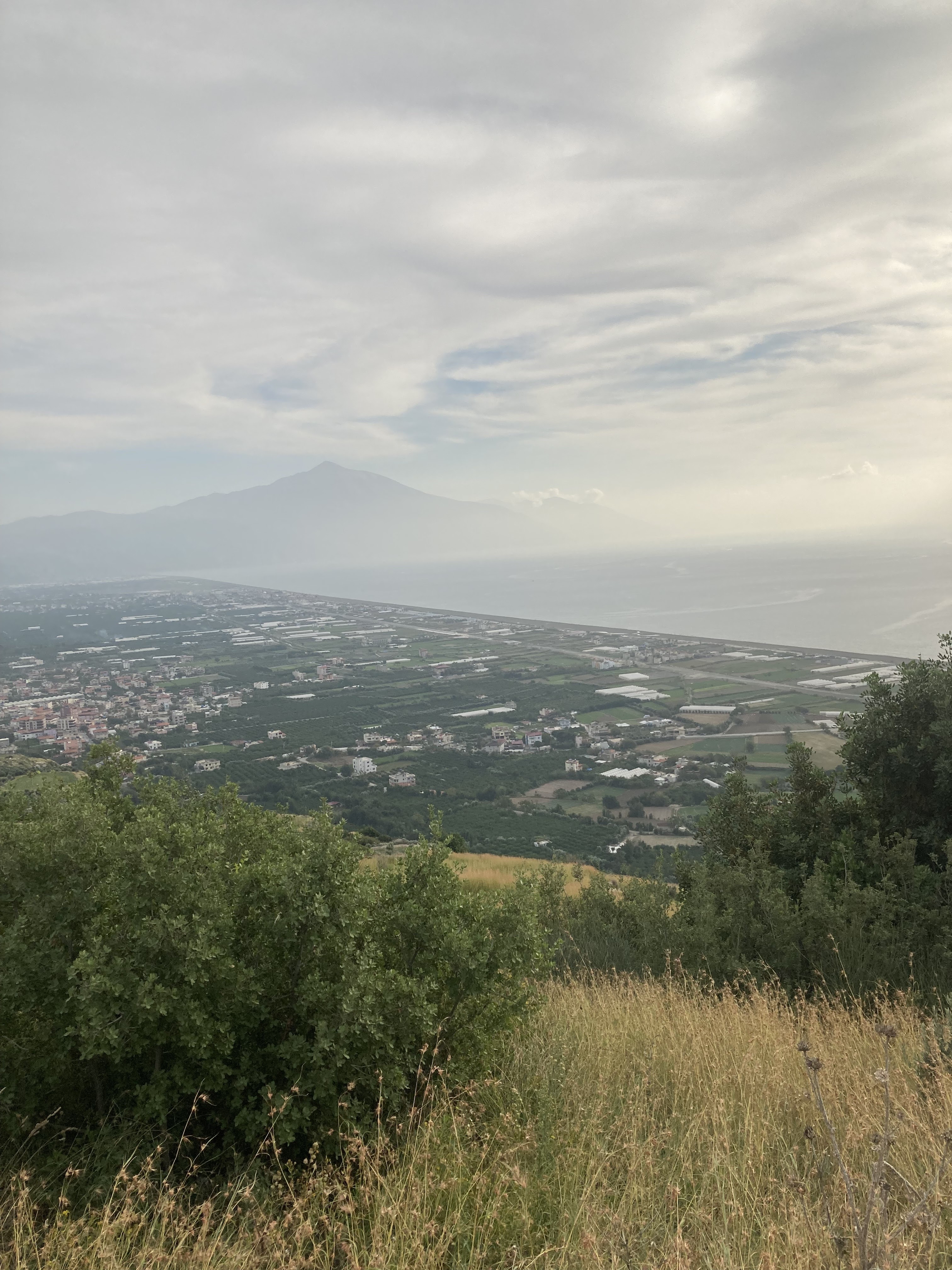
Mount Cassius, seen from Antakya in Turkey. On the other side is Syria.
This afternoon, Ireland added itself to the list of European countries to suspend the processing of asylum applications by refugees from Syria. Austria, Belgium, Croatia, the Czech Republic, Denmark, Finland, France, Germany, Greece, Italy, the Netherlands, Norway, Poland, Sweden, Switzerland and the UK had already done something similar.  It is, of course, very convenient in terms of right-wing domestic narratives about defending European identities and stopping the boats. It also plays very readily into the standard Western mythological narrative of the individual hero (or villain). When will we learn? "Get rid of the bad guy" we always say "and the problem is solved." It's truly extraordinary that, only a couple of days after Assad's fall, European countries should be taking actions that imply Syria's problems are over.

Of course, there are many Syrian people who desperately want this to be true. Many of the Syrian friends we worked with in Turkey to create SUPPLIANTS OF SYRIA have been expressing relief, joy, and a deep desire to return to what remains their beloved home, in spite of the devastation wrought upon it. Some Syrians have begun the journey: and of course the actions of European governments can only encourage this. But there are also a great many people travelling in the opposite direction: people who, in one way or another, may have worked for the Assad government, or who may fear that others will think they did. Just because the dictator has fallen, it doesn't mean there is going to be a free and peaceful, benign and gentle regime established in his place. Look at what happened after Gaddafi's fall. Or Saddam Hussein's. Or Louis XVI's. A revolution, including one that overthrows a tyrant, leaves a void, and a void becomes a contested space that may be filled in many ways.

Those same European governments who have suspended asylum claims are also rapidly considering whether to remove HTS (the insurgent organisation that brought down the regime) from the list of terrorist organisations. It would suit their agenda to do so. However, HTS is an Islamist organisation that emerged from IS and Al-Qaida. Since 2017, they have held sway in Idlib, which was the last stronghold of IS - a place to which none of the refugees I have met expressed any desire to return. It is true that the HTS leader, known in Idlib as Abu Mohammed al-Jolani, has reverted to his birth name Ahmed al-Sharaa, and is taking some pains to paint the country's future as egalitarian and democratic (whatever that may mean - the Suppliants ask). But his history does not suggest the sort of leader Western powers like to see in the Middle East. From 2003-6 he was a jihadist combatant in Iraq, and spent time under American incarceration, including in Abu Ghraib. After 2011, he returned to Syria to fight for IS. On his triumphant arrival in Damascus, he spoke of it as “a victory for the Islamic nation”. “I left this land over 20 years ago, and my heart longed for this moment,” he said. “Sit quietly my brothers and remember God almighty.”

They might also want to remember President Erdogan of Turkey. HTS has a complex relationship with the Northern neighbour who houses so many of their compatriots, but there is no doubt that it was their uneasy alliance which allowed HTS to hold sway in Idlib for the last seven years. Turkey wants a Syrian regime that is hostile to the Kurds, and an excuse to reduce its enormous refugee population. As so often, Erdogan lines up uneasily beside the Europeans. 

Those last seven years in the micro-state around Idlib offer the best indication of how HTS may try to rule Syria (in so far as there is even a state left to rule). The basic services of government were supplied, and taxes were levied to pay for them. They also imposed deeply conservative rules, particularly on women, and dealt brutally with any opposition. Informed sources are suggesting we may see something close to the Taliban. Meanwhile, Turkey has increased its attacks on the Kurds, who are deprived of their uneasy alliance with Assad, and Israel has been advancing from the Occupied Golan, intent on taking Syrian military bases so as to avoid their coming under Islamist control.

Is this really the moment to suspend all asylum claims from Syrian refugees? 

Wednesday, October 23, 2024

Premier in Adana - Radical Empathy

From Suppliants of Syria

Lucy and I went back to Turkey last week, for the premier of the film version of Suppliants of Syria.  The film is feeling like an ever more important part of this project, not least because of the huge challenges of raising the funds to perform the play in the region where it's set. I'm determined that we will get it to Adana, where we can share it with the Syrian women who took part, but that goal is still a long way off, and in the meantime we owed it to them to impart some sense of how we've been responding to their offer and their work.

It had been some time since I'd looked at the film, so I was able to be more objective about it than is usual when my work first goes in front of audiences.  I'm pleased to say that I was very moved by it - the women's sharing of personal stories, intercut with the Choruses from the Greek play Suppliants, is really searing in its honesty. Their acting, the cinematography and the music feel so rooted in that experience that it's impossible to resist its emotional force. And it's very exciting to have that put into dialogue with more political and structural considerations - there's a very theatrical, I guess Brechtian, interplay between the emotional truths and the objective frames around them.

Which said, my own emotional response pales into insignificance beside the reaction of the women themselves. In the Q&A that followed the screening, one of them, Iman, said that the film was "an incredible achievement - but I have been crying all the way through." I had thought that this was rhetorical, but Lucy, who was sitting amongst them, told me that all of them had been in tears from very early in the film. I suppose there was a lot being re-visited for them all; and there were also new stories they probably did not know, about the personal journeys of their friends who were sitting beside them. There's a moment in the film where some of them share with me that they had never told the stories before. The frame of the creative project was essential to draw out these incredibly important truths.

Another audience member was a Turkish NGO worker, who said that the film would bring out empathy in its audiences, and this was really important for the ongoing refugee work of her organisation.  I found myself responding that what is needed everywhere - not just in Turkey but also in Europe, America and global - is a new radical empathy as the way past the politics of prejudice.  It's very hard to hate somebody when you have heard them tell stories like these.  

Friday, December 29, 2023

Looking Back at 2023

Songstreets

When I started to think about reviewing 2023, the logical first step was to look over what I'd written last December about 2022. That was the year when we issued THE SLIGO MANIFESTO, and my account of the year followed its structure, examining how we were moving towards those new ideas about what Border Crossings needs to do and to be in today's shifting world. Much of 2023 has been about laying the foundations for that emerging model.

The year began by consolidating and polishing the work we'd been creating in 2021-22, particularly the final stages in the prolonged and searching ORIGINS Festival we'd made through that time. BOTANY BAY may officially have ended a year ago, but the process of working through what that huge project had actually achieved was in itself a major undertaking, and it wasn't until the start of March that we published Carolyn Defrin's reflective post on this blog. SONGSTREETS, which we'd also been developing through ORIGINS, was launched in the Spring, and remains available to download and experience. It's one of our most exciting ventures yet in digital performance - Thor McIntyre-Burnie's sound world shifts the experience of walking the streets of Brixton, animating them as Tony Cealy shares histories and dialogues with the locals, with the music brought out by Jessie Lloyd becoming manifest as the soundtrack to their lives. It's been fascinating to live with this work over the last few months, watching how the shifting seasons change the experience, how the cold day of the launch emphasised the challenges facing the community, while taking the walk in summer made it a story of resilience and celebration. 

Early 2023 also saw the final phase of X-EUROPEAN: the project exploring Third Space methodologies in which Border Crossings (Ireland) was the theatrical collaborator. It was only days after we held our last project meeting in Aalen (Germany) that the city of Adana, home to our wonderful Turkish partners at Çukurova University, was hit by a devastating earthquake. İlke Şanlıer's deeply impassioned and pained guest blog post came in the immediate aftermath. Somehow, Adana has re-emerged as the vibrant, busy city it was before (although its neighbour Antakya remains a site of devastation): we are now working closely with İlke and her colleagues on SUPPLIANTS OF SYRIA, which promises to be the first of our theatrical creations fully to embody the principles and ideas outlined in THE SLIGO MANIFESTO. We undertook the first phase of development in Turkey during November, and are hugely excited to be starting work with British and Irish actors in January. The next week or so will also tell us whether or not we've been successful in a large funding bid which would enable a second 2024 project - one that would reach performance in the autumn...  

Filming for SUPPLIANTS OF SYRIA

So there are definitely reasons to be hopeful as we begin the New Year, though at the same time the great crises facing the world seem to be coming into sharper, more intense and horrific focus than ever before. Cop 28 has ended with an agreement to phase out fossil fuels, and yet the president of the summit himself intends to continue investing at record levels in the production of gas and oil. The war in Ukraine is heading towards its third year, while in Gaza there are unprecedented levels of civilian and child casualties. In the UK, the government remains determined to send asylum seekers to Rwanda, despite the Supreme Court having ruled that this is illegal; and in Ireland we have seen the radical right unleashed on the streets of Dublin in a frenzy of racially motivated violence.

We need the arts. We need our cultures. We need spaces of exchange, depth and emotional sharing; spaces where, in the face of the reductive, shallow sloganeering that passes for a public discourse, we can encounter one another in the fullness of our common humanity. 

Lucy and I experienced this very deeply during our November in Adana, where we worked with Syrian women on our new theatre and film project, SUPPLIANTS OF SYRIA. We heard stories of horror, and stories of tenderness. We saw tears, and we heard laughter. While we were there, we also had the privilege to present an online reading of THE GAZA MONOLOGUES, created by our partners in Ramallah, ASHTAR Theatre. In these moving stories, written by young people in the aftermath of a previous conflict, we again recognised the vulnerability that makes people loveable, the simple presence that makes them dear.

As we move into the New Year, it is in cultural spaces like these that we retain our hope to turn the page of history. 

Sunday, November 12, 2023

Arrival, Adana, Antakya

Women making bread by the roadside, Antakya

Just over a week ago, Lucy and I arrived in Turkey to begin work on Suppliants of Syria. We're partnering with our old friends from Çukurova University in Adana, where the wonderful İlke Şanlıer combines her role in the Film and TV department with directing the Research Centre in Migration.  It's the perfect combination for a project that combines theatre and film with an active engagement in the ongoing refugee  "crisis". The theme is being lent additional potency by the current situation in Palestine: just after we arrived, a very large protest in support of Palestine took place at the airbase in Adana, where American planes and personnel are stationed. The police used tear gas and water cannon to prevent people entering the base; but that doesn't mean that the government isn't sympathetic to the protestors' expression of solidarity between Muslims.  

We've been able to establish a relationship with the Meryem Women's Co-operative: a fabulous organisation that enables Syrian women to work in areas like gardening and food production. A group of around 20 of them are in the process of becoming our Chorus. We've also been filming and researching in and around the city. I don't want to write too much about this as yet, because it needs time to absorb what we're seeing. Today we went to an area of Adana known as "Little Aleppo" on account of its large Syrian population.  The poverty was very apparent. Many of the people there seem to eke out a living by selling discarded or recycled clothes which they show piled in the streets. Earlier in the week I visited Antakya: the city to the south of Adana which bore the brunt of the earthquake earlier this year. Antakya also has links to Syria: the majority of the pre-earthquake population spoke Arabic, and Syrian maps still show the area as part of their country, which they regard as having been annexed by the Turkish Republic in 1939.  The city is utterly devastated. My friend Ali, who now lives near me in London, showed me round what remained of his childhood home. He often could not work out where he was, because there were no landmarks remaining. He would occasionally stop and examine the remains of a cornice or a metal door, and then say "This must be the old bank..."

And yet, in spite of everything, life endures. Ali's parents had a 100 year old house in the rural hinterland: it was destroyed.  But Ali's father Mehmet, at the age of 69, has single-handedly build a new living space beside the rubble where the old house stood, and on Wednesday night we ate the traditional meal for the end of the olive harvest and the production of the new olive oil on that land.  In the middle of the wreckage, Ali pointed out a plant. "It's a tomato plant", he said. "It used to be on the balcony just above where it is now." Somehow it survived - and is thriving. 


Monday, December 19, 2016

Speaking in Stockholm


Stockholm is a very beautiful city: even in December, when it's dark almost all the time.  I was lucky enough to be asked to speak at a conference there by Chris Torch of Intercult.  Once again, Rosanna Lewis and I were presenting the Voices of Culture report on the role of the arts in the refugee crisis.  It's starting to feel a bit like a Farewell Tour of European Capitals in the run-up to Brexit...

Anyway - here's a brief extract from what I had to say - which I suppose is also a bit of a Christmas 2016 message.

"It’s December.  I am so happy that this appalling, terrifying year is coming to an end - let’s just have a new one, shall we?  Not that 2017 is exactly looking full of promise……   January will see the unthinkable happen, when a President endorsed by the Ku Klux Klan enters the White House.  In March, Article 50 will, it seems, be triggered - with the agenda of what Teresa May has called “a red, white and blue Brexit”  - whatever that’s supposed to mean….     And everyone who might physically have some tiny chance of getting out of Aleppo will carry on trying to get out of the bloodbath that is Aleppo.  The flow of refugees is not going to be stemmed.

And what is the West doing?  It’s putting up walls.  Some of these walls are absolutely literal - the UK government built a huge wall in Calais as yet another barrier to the movement of refugees.  Donald Trump says he’s going to build a wall right along the US-Mexico border and get the Mexicans to pay for it…  (hello..)…  And some of them are more metaphorical - like the deal the EU did with the Turkish autocrat to prevent Syrian refugees crossing into Europe.  Or the Swedish government’s sudden decision last January to impose border controls on the bridge from Denmark. This continent defined itself, declared itself in a moment of hope in Berlin in 1989, when a wall came down.  And today - we see the exact opposite.  It’s a very strange time to be running a theatre company called Border Crossings - just as it’s probably a very strange time to be running an organisation in Sweden called Intercult - and it’s a very strange time to be working with communities of refugees.

And yet it is in these refugees themselves that our most precious resource is to be found - and that is something called Hope.  Hope, which in turn leads to creativity and transformation.   Hope is that treasured vision in the deepest part of the human soul that people locate and draw off in the darkest of times, in the most pitiful of conditions.  Hope is what enables a human being to commit their body to a massively overcrowded, makeshift craft adrift on an open sea - that will take them to an alien land where they know they will not be made welcome.  And hope - for us - for artists and cultural workers - hope is the choice we make deliberately to follow the most difficult path in our own lives because of something that we believe in.  Justice."

Wednesday, February 10, 2016

Brook's Battlefield

Battlefield: Ezy Nzaramba
The late Pierre Boulez, David Attenborough and Peter Brook all seem to be proving it: 90 is the age to be.  Many cultures have known for a long time that we need to value our Elders - at last the West seems to be catching up.  And Brook's production Battlefield, created at the age of 90, is actually his finest work for some time.

It's a return to the territory of his famous Mahabharata production - although where that was epic and vast, this is intimate, brief and personal.  This seems to me to offset some of the criticisms Rustom Bharucha made of Mahabharata: unlike the earlier production, Battlefield does not turn the Hindu myth into a Hollywood blockbuster or a Shakespearean tragedy.  Rather, it makes it the occasion for contemplation, introspection, and a complex emotional journey.  The play begins after the climax of Mahabharata, the great war, and deals with the question Eliot asked of the contemporary age: "After such knowledge, what forgiveness?"

It is an urgent, necessary question for an artist to be asking at the end of his life, in what may well be his last piece of work.  In many ways, the play embodies that sense of an unending quest, with older characters attempting to make sense of the world they are about to leave.  Bhishma, who can only die with his own agreement, clings to life in the face of a mortal wound, speaking of how a dying man can long for honey.  When at last he leaves his body, in a moment of extraordinary theatrical simplicity and  power, it is his mother, the River goddess Ganga, who expresses a terrifying, astonishing grief.

I'm making it all sound quite heavy - but actually the play is full of humour too, with Bhishma and other characters telling parables, which are winningly enacted using only cloths and sticks for set and props.  The story of the worm crossing the road who loves his life is at once endearing and provocative.

Being Brook, all of this leads towards a spiritual meaning; and, being Hindu, that meaning is essentially one of resignation.  Yudishtira, left to rule in the aftermath of the war, comes to accept the suffering that has gone before, recognising it as yet another "illusion" (the Sanskrit term is Maya).  Both Michael Billington and Aleks Sierz have challenged this in their reviews of the production, asking whether we can really accept (say) the suffering of the Syrian refugees as something of no real consequence.  This dismissal of human pain could seem particularly callous in relation to the play, given the presence of Rwandan performer Carole Karemera at its heart.  Hinduism can be criticised for its acquiescence in human suffering, partly the result of its cultural origins in India, and its role in the maintenance of power structures.  However, in absolute terms, the theology is right - human lives are tiny, inconsequential things in terms of the scale of space and time, of course they are.  But, as Sartre argued, that doesn't mean we should not care about them - it simply means we have to acknowledge that it is our own decision to choose morality, and that the compassion we feel for the Syrian child or the Rwandan widow is our own compassion, willed and active.  Strangely, this makes our humanity more significant, rather than less.  It is Carole Karemera who gives expression to this deep grief in our condition, through the prolonged wail of the bereaved mother-goddess.

Monday, June 03, 2013

Beirut - Day 1


Brian Woolland and I arrived in Beirut last night, just as the Syrian conflict spread over into Lebanese territory.  We're here for a week, thanks to the British Council, to start work with Zoukak - a very exciting theatre company in the city.  I met Maya Zbib, one of their core members, a while ago when we were on a panel about international work at CSSD - and it turned out that she was being mentored by Peter under the Rolex scheme.  Many a connection....  Brian and I had been discussing an idea for a new play with Middle Eastern collaborators for some time, so it's fantastic that we've finally got an opportunity to develop it, and ACE has given Brian a grant to write it too.

So this isn't quite like most of the development processes we've undertaken in the last few years, in that this time there is somebody in the room who will be the author of the play, and who has strong ideas about what it may turn out to be.  So it's not a devising process as such.  On the other hand, Brian is very aware that cross-cultural work is not about a single voice but about multiple viewpoints, and that real drama about global issues can only be generated out of different energies between people from distinct backgrounds.

Today has already proved the point.  Brian and I have been suggesting to the actors various scenarios and episodes, drawn from mythology, which might be dramatised.  What is fascinating is the way in which these become the way in to very immediate concerns in this region.  The figure of Delusion becomes a way into a fundamentalist Islamist rant for one group; while for another it generates a scene about a fatwa which allows jihadists to have sex with young girls as a 'necessary way of dealing with their violent male energy' - apparently this is happening in Syria at the moment.  The work is not only exciting in terms of content, but also theatrically vital - not least because of the ease with which Lebanese actors are able to shift between Arabic, English and French.  The Arabic here is very muscular - softer than in Egypt, but very energised.  It makes for very intense drama.

And so, of course, does the city.  Heavily armed soldiers everywhere.  Military checkpoints.  And buildings pock-marked by the bullets of the civil war.